

For decades, the standard conversation between an Indian homebuyer and a real estate broker was entirely transactional, driven by a predictable script. “Kitna area hai? Rate per square foot kya hai? Possession kab tak milega?” The property was viewed primarily as an asset class—a collection of brick, mortar, and concrete defined strictly by its physical dimensions and its proximity to a main road or commercial hub.
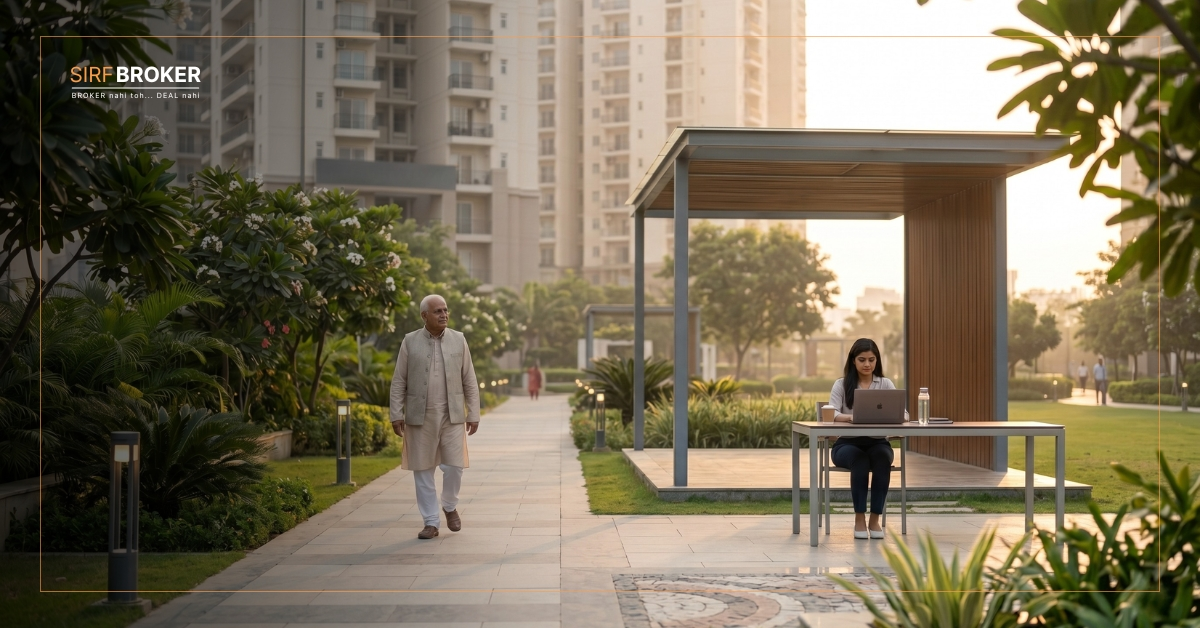
Today, that script is undergoing a radical structural rewrite. Walk into any premium sales gallery or broker consultation across India’s metropolitan nodes, and the questions sound entirely different. “Is there a dedicated walking track free of vehicular movement? Do you have an active senior citizen care ecosystem? Can I work from the clubhouse if my hybrid schedule demands it? Is there a reliable maintenance agency managing the green spaces?”
The Indian homebuyer has shifted from viewing property simply as a real estate asset infrastructure to evaluating it as lifestyle infrastructure. This deep behavioral evolution is redefining market dynamics across lifestyle housing in India, senior living real estate in India, and second homes in India. Buyers are no longer asking how much space they can own; they are asking how that space will improve their daily rhythm, health, and family dynamics.
The Great Behavioral Shift: From Asset to Lifestyle Infrastructure
Historically, purchasing a house in India was an exercise in optimization: maximizing square footage while minimizing capital outlay. Security meant a physical boundary wall and a guard at the gate; luxury meant a marble floor or a slightly bigger balcony. This old framework treated the home as a passive shelter where you returned after a long day of fighting urban chaos.
As the market moves through 2026, the modern home has transitioned into an active environment that is expected to solve daily urban friction. Accelerated by prolonged commutes, an intense focus on holistic health, and the mainstream adoption of flexible work models, buyers realize that their immediate physical environment directly impacts their mental clarity and physical longevity. Property is no longer just about financial appreciation; it is about buying time, preserving well-being, and securing a reliable community.
The New Decision Frame: “Will This Home Improve My Daily Life?”
When changing homebuyer preferences in India are analyzed, the underlying question has changed from a purely financial calculation to an experiential assessment. The modern consumer assesses real estate through a new decision-making filter that places equal weight on physical attributes and intangible lifestyle returns.
| Modern Home Value = Location + Space + Community + Wellness + Safety + Flexibility + Daily Convenience |
If a project scores exceptionally high on location and square footage but fails miserably on community quality, safety, and wellness, its value is significantly discounted by the modern end-user. The future of the industry belongs to developments that treat these intangible metrics as core architectural requirements rather than optional marketing line items.
| The Indian homebuyer is no longer buying walls alone. They are purchasing time, health, safety, community, retirement comfort, weekend escape, and a better daily rhythm. |
Decoding the Pillars of the New Demand Landscape
1. Lifestyle Housing: Gated Communities as Self-Sustaining Ecosystems
The premium housing demand India is observing is heavily concentrated within well-planned, integrated gated communities. Buyers are gravitating toward lifestyle real estate India projects that feature comprehensive wellness amenities, robust multi-sport complexes, pedestrian-only central greens, pet-friendly zones, and high-tier co-working hubs or business centers. The goal is to minimize external dependency, allowing individuals to access fitness, social connection, and professional work settings without stepping outside the community gates.
2. Senior Living: Dignity, Care, and Community Real Estate
According to demographic trends highlighted in multiple market analyses, India’s aging population is increasingly seeking specialized housing alternatives. The traditional model of senior care in nuclear families is facing systemic strain, making senior living real estate in India a critical niche market. Modern retirement homes in India are no longer viewed through a lens of isolation; instead, they represent proactive living choices that offer active peer groups, advanced medical response frameworks, senior-friendly non-slip architecture, nutritional catering, and a life of independent dignity.
3. Second Homes: From Rare Luxury to Wellness and Work Retreats
The market for second homes in India has transformed completely. Previously restricted to ultra-high-net-worth individuals holding legacy estates, weekend homes in India, and leisure properties in locations like Goa, Alibaug, Dehradun, Kasauli, Karjat, and various hill destinations have become mainstream targets for senior corporate professionals. Driven by hybrid and work-from-home models, these properties serve as immediate wellness sanctuaries, future retirement pads, or income-generating vacation rentals managed by professional asset agencies.
The Three Emotional Anchors: Convenience, Control, and Calm
To understand real estate demand in India 2026, market professionals must look beneath the surface features and identify the psychological drivers governing buyer behavior:
- Convenience: The elimination of daily friction via in-house concierge assistance, professional building maintenance, doorstep emergency response, and integrated high-street retail access.
- Control: The peace of mind that comes from living in highly secure environments where visitors are authenticated through digital gate systems, children play safely in auto-free zones, and essential resources like water, power backup, and high-speed internet are guaranteed.
- Calm: A conscious rebellion against urban pollution and noise. This is driving the development of wellness homes in India that emphasize indoor air quality systems, expansive water bodies, therapeutic gardens, and double-glazed windows that block out traffic noise.
The Professional Perspectives
The Investor’s POV: Shifting Focus to Lifestyle-Led Yield Premiums
Smart real estate investors are pivoting away from generic, entry-level residential projects that compete entirely on price discounts. Capital is migrating toward projects that command high rental premiums and superior exit liquidity due to their robust lifestyle infrastructure. A well-managed, amenity-rich lifestyle society frequently yields 15% to 25% higher rental values compared to standalone buildings in the exact same PIN code, because the tenant pool is also paying for the ecosystem.
The Developer’s POV: Designing for the Holistic Human Experience
Forward-thinking developers are shifting their strategies from execution speed alone to master-planning human experiences. They are widening corridors, investing heavily in smart clubhouse layouts, collaborating with professional operators for senior living facilities, implementing sustainable waste and water systems, and incorporating architectural elements that accommodate pet care and remote work infrastructure right from the initial blueprint stage.
| The Advisory Edge (Broker Checklist) Avoid Outdated Pitching Tactics: “Sir clubhouse hai, swimming pool hai, premium project hai, aankh band karke le lo.” Adopt an Advisory Approach: “Sir lifestyle value brochure se nahi banti. Humein dekhna padega ki amenities usable hain ya nahi, maintenance cost long-term mein justified hai ya nahi, aur senior safety, daily convenience, community management aur future resale demand kaisi hai. Let’s analyze how this layout fits your family’s daily lifestyle.” |
The Brochure Trap: Identifying Fake Amenities vs. Real Utility
As lifestyle housing in India trends upward, a major market challenge has emerged: the differentiation between actual lifestyle delivery and surface-level marketing gimmicks. This is known as the “Brochure Trap.”
Many projects display high-end digital renderings of grand infinity pools, premium cigar lounges, and world-class organic reflexology pathways. However, buyers must look closely at operational execution. If a developer builds a massive clubhouse but lacks a professional facility management tie-up, the swimming pool becomes a maintenance burden within two years, the gym machinery rusts, and the community spaces fall into disuse while maintenance charges skyrocket. True lifestyle housing requires institutional-grade, long-term property management ecosystems.
The Lifestyle Value Score
To accurately assess whether a premium property justifies its financial markup, buyers and brokers can utilize the Lifestyle Value Score (LVS) framework. Score each element from 1 to 10 to understand the true value proposition of the asset.
Lifestyle Value Score Breakdown:
- Daily Convenience (Weight 20%): Proximity to grocery hubs, pharmacy networks, and transport links.
- Wellness Access (Weight 20%): Functional, non-crowded gym spaces, running tracks, sports courts, and green covers.
- Community Quality (Weight 15%): Active resident spaces, low density per acre, and designated social zones.
- Safety & Accessibility (Weight 15%): Advanced visitor management, vehicle-free zones, and wheelchair compliance.
- Age-Friendliness (Weight 10%): Ease of movement for elderly parents and dedicated play zones for children.
- Work Flexibility (Weight 10%): Power back-ups, high-speed connectivity, and common co-working pods.
- Exit Demand (Weight 10%): History of active rental demand and low asset vacancy in the micro-market.
Market Analysis and Core Matrices
Table 1: Strategic Real Estate Needs Across Changing Segments
| Segment | Core Buyer Expectation | Critical Real Estate Requirement | Primary Investment Risk |
|---|---|---|---|
| Lifestyle Housing | Frictionless daily living, wellness, social community. | Low-density master plan, vehicle-free green zones, institutional facility management. | High monthly maintenance outlays erasing rental yields if unmanaged. |
| Senior Living | Medical safety, peer companionship, independent dignity. | Anti-skid flooring, 24/7 panic buttons, ambulance tie-ups, nursing kiosks. | Limited secondary resale market velocity; highly specialized end-user asset. |
| Second Homes | Peaceful rejuvenation, rental returns, weekend escape. | Scenic location, clean clear titles, professional vacation rental management. | Illiquidity during general market downturns; high seasonal variance in rental demand. |
| Wellness-Led Communities | Air & water purification, organic spaces, structural quiet. | Advanced water filtration plants, sound-insulated windows, dense plantation blankets. | Paying high tech premiums to developers without verified long-term delivery records. |
| Work-From-Home Homes | Productive professional environment inside the residential layout. | Acoustically sound multi-functional study spaces, multi-provider fiber lines. | Rapidly outdated tech setups if building designs are too rigid for future upgrades. |
Table 2: The Lifestyle Reality Checklist
| Crucial Buyer Question | Why It Matters Long-Term | How to Inspect and Verify on Field |
|---|---|---|
| Is the amenity actually usable? | Prevents paying premiums for non-functional decorative spaces. | Check real capacity sizing against the total number of apartments in the master phase. |
| What is the real monthly maintenance? | Impacts long-term recurring carrying costs and net rental yields. | Request a detailed breakdown of the maintenance corpus fund and recurring item estimates. |
| Is high-tier healthcare nearby? | Crucial for senior safety and family emergency response times. | Map physical drive times to tertiary care hospitals during peak traffic hours. |
| Is the community professionally managed? | Determines the aging cycle and structural condition of the shared property. | Inquire if the developer has signed a contract with institutional facility firms (e.g., JLL, CBRE). |
| Is there verifiable rental demand? | Ensures asset self-sustainability and steady cash inflows. | Review local broker data on vacancy turnarounds for amenity-heavy projects nearby. |
| Is the second-home access reliable? | Determines if you will actually use the property on a regular weekend. | Check seasonal connectivity, monsoon road vulnerability, and flight/train frequencies. |
Strategic Pitfalls Buyers Must Avoid
- Paying Exorbitant Premiums for Graphic Renderings: Do not buy into lifestyle housing based solely on digital brochures; investigate the developer’s track record in maintaining operational phase clubhouses.
- Ignoring Long-Term Maintenance Costs: High-end wellness features require significant cash reserves. Ensure the recurring maintenance cost does not make the property a financial burden.
- Buying Isolated Second Homes: A beautiful villa in the hills loses its appeal if the nearest reliable hospital or grocery store is a 90-minute mountain drive away.
- Confusing Vacation Mood with Investment Logic: Spending a pleasant weekend at a resort destination can cloud financial judgment. Buying property requires looking hard at tenancy laws, local water availability, and resale liquidity.
- Overlooking Professional Community Management: Senior living and premium complexes require dedicated staff. Avoid projects where management responsibilities are vaguely handed off to an untrained resident welfare association (RWA) without professional backing.
The Final Sirf Broker View
The conversation around home buying behavior in India is no longer an elementary discussion about geographic distance or cost per square foot. The country’s real estate paradigm has matured. The luxury properties or specialized senior living assets of today are valued by how effectively they shield families from urban friction and create environments for optimal living. When evaluating your next property investment, stop looking only at the outer walls of the apartment. Step out, look at the ecosystem, and ask yourself the only question that truly matters for the next decade of real estate: “What kind of daily life does this property create for my family?”
Frequently Asked Questions (FAQs)
Q1: Why is lifestyle housing growing faster than standard residential options in India?
A: Modern homebuyers place a high financial premium on mental well-being, physical health, and time conservation. Integrated gated communities eliminate daily urban friction by providing fitness, entertainment, and safety within a self-contained ecosystem.
Q2: Is senior living real estate in India a good investment option?
A: Senior living properties offer excellent, steady rental yield potential due to a rising aging demographic and limited institutional supply. However, investors must remember that resale liquidity can take longer because the buyer pool is highly specialized.
Q3: What makes a second home a successful asset instead of a liability?
A: A second home succeeds when it features excellent year-round road or air accessibility, clear legal land titles, proximity to medical facilities, and access to a professional vacation rental management agency that drives passive income when the owner is away.
Sources and References
- Institutional Property Reports: Global and domestic real estate insights on luxury residential asset movements, residential buyer behavior, and senior living trends by Anarock, Knight Frank India, JLL, and CBRE.
- Financial and Industry Media: Recent buyer preference polls and residential demand analysis columns published by The Economic Times, Business Standard, and Moneycontrol.
- Demographic Data: Macro population trend briefs and aging indices tracked via the Ministry of Statistics and Programme Implementation (MoSPI).
Disclaimer: The content, frameworks, and insights provided in this article are intended solely for educational and informational purposes. Real estate investments involve market vulnerabilities, policy changes, and execution schedules. Readers must perform thorough independent due diligence and seek guidance from legal and financial experts before finalizing any property transactions.