

India’s top-seven-city residential market sold 90,715 homes in Q2 2026, against 96,285 units sold in Q2 2025 — a decline of 6% year-on-year, according to ANAROCK Research. That is the number most coverage will lead with. It is accurate. It is also, on its own, almost entirely misleading about the state of Indian residential real estate in 2026.
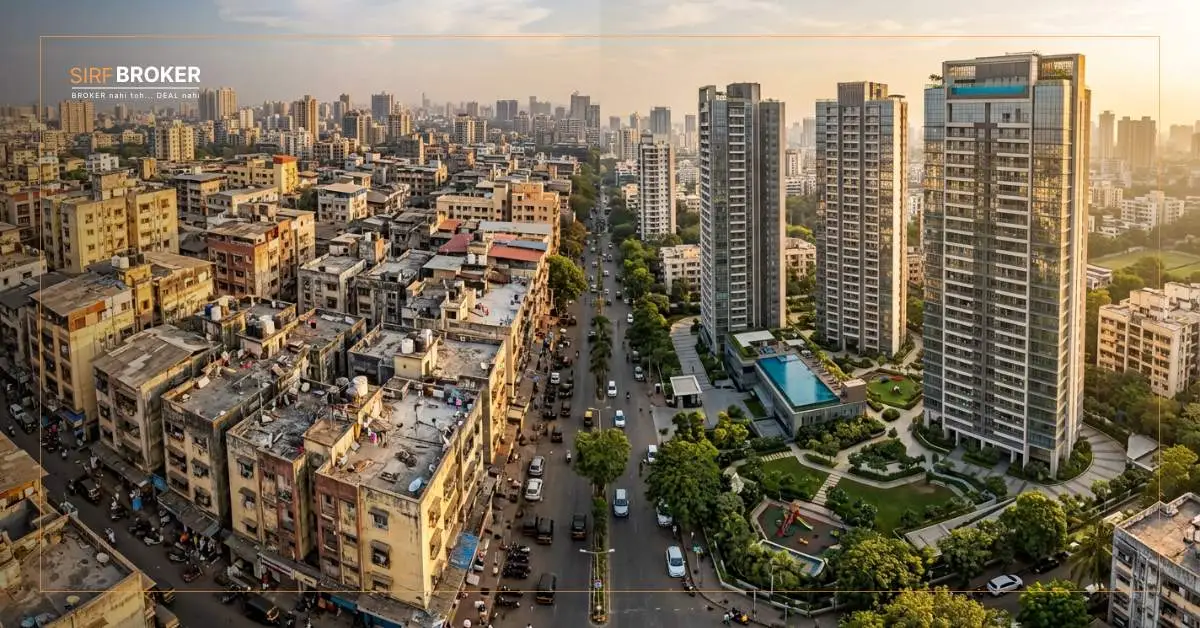
The 6% decline is not a broad market correction. It is not evidence of slowing demand from GCC professionals, dual-income households, or aspirational premium buyers. It is the numerical consequence of one specific segment — sub-₹1 crore homes — experiencing a structural supply collapse that has been building since 2019, reaching the point where volume decline in that segment now outweighs volume growth in premium. The premium market is not declining. The ₹1.5–3 crore segment grew 58% year-on-year in H1 2026, per Business Standard citing market research. Read correctly, this data describes not a slowing market but a bifurcating one.
| India Residential — Q2 2026 at a glance · Q2 2026 sales: 90,715 units (down 6% YoY) · H1 2026 total: 1,38,382 units (up 3% YoY) · New launches H1: 1,68,507 units (up 9% YoY) · Sub-₹1 crore sales: down 52% YoY · Above ₹1 crore: 71% of all H1 sales · ₹1.5–3 crore segment: +58% YoY — fastest growing · Affordable launches Q2: just 6% of supply (was 52% in 2018) · Pune H1: 44,265 units worth ₹37,048 crore Sources: ANAROCK Research; Business Standard, July 21, 2026; JLL Q1 2026 Residential Dynamics; prokerala.com; RealtyNMore. |
What the 6% Decline Actually Represents
The mechanism behind Q2 2026’s 6% residential dip is not demand weakness — it is supply withdrawal from the affordable segment combined with a price floor effect that has priced a large cohort of buyers out of the primary market in India’s major cities.
Affordable housing — units priced below ₹1 crore — accounted for just 6% of new launches in Q2 2026, according to ANAROCK Research. In 2018, that share was 52%. The collapse in affordable launch share is the single most important structural fact about India’s residential market in 2026, and it is the direct cause of the Q2 volume dip.
Private developers in India’s major cities have not stopped building affordable housing because demand disappeared. They have stopped because the unit economics no longer work. Land costs across metro India have risen 40–100% since 2019. Construction costs — steel, cement, skilled labour — have risen 25–40% in the same period. The combination makes sub-₹50 lakh primary development economically unviable without government subsidy. Developers with healthier balance sheets redirected capital to the premium segment, where margins are higher, buyers are less price-sensitive, and RERA compliance has improved delivery track records enough to sustain demand from creditworthy buyers.
| Segment | H1 2026 Launch Share | YoY Sales Change |
|---|---|---|
| Sub-₹50 lakh (Affordable) | ~6% of launches (was 52% in 2018) | Collapsed — private supply withdrawn |
| ₹50L–₹1 crore (Mid) | Declining share | Down significantly YoY |
| ₹1–1.5 crore (Entry Premium) | Growing share of supply | Steady to moderate growth |
| ₹1.5–3 crore (Aspirational Premium) | Largest and fastest-growing | +58% YoY |
| ₹3–10 crore (Luxury) | Strong; branded developer focus | Robust growth |
Premium Is Not Declining — It Is the Market
Units priced above ₹1 crore now represent approximately 71% of all residential sales across India’s major cities in H1 2026, up from 49% in H1 2025, per Business Standard. New launches rose 9% year-on-year to 1,68,507 units in H1, confirming developer confidence in continued premium demand even as overall sales volume softened from 2025’s elevated base.
Pune alone registered 44,265 home sales in H1 2026 valued at ₹37,048 crore, per RealtyNMore. Prices across India’s seven major cities rose 8–20% year-on-year in Q1 2026, per JLL’s Q1 2026 Residential Dynamics Report. Bengaluru, Chennai, Delhi NCR, and Kolkata all exceeded 12% price growth. These are not the indicators of a market in broad correction.
The buyers driving the ₹1.5–3 crore segment are structurally different from the aspirational first-time buyers who drove affordable volume in the 2010s. GCC professionals with RSU-linked equity and stable technology or BFSI employment represent the natural ₹1–2.5 crore buyer in 2026. NRI investors — projected at 18–20% of premium purchases per CBRE-ASSOCHAM data — add further weight. These buyer profiles do not disappear in a quarter of softening volume. They adjust their decision timing and re-enter when they assess that waiting carries more risk than buying.
What H2 2026 Looks Like From Here
The developers who matter in the premium segment are not reading Q2 2026 as a slowdown signal. Lodha Developers reported Q1 FY27 profit doubling on higher revenue and collections, per Business Standard on July 24, 2026, with 20% profit growth targeted to ₹4,100 crore in FY27. That is not the guidance profile of a developer responding to genuine market weakness.
New supply will remain ahead of sales in the short term — H1 2026 saw 1,68,507 units launched versus 1,38,382 units sold. That inventory build is not alarming nationally, but specific configurations in the ₹2–4 crore range in certain Gurugram and Bengaluru corridors will face more competitive pricing in H2. For brokers advising premium buyers, this creates opportunity: inventory availability is improving, developer motivation to close is increasing, and a buyer with a strong purchase profile has negotiating leverage they did not have 18 months ago.
For the sub-₹1 crore segment: PMAY-Urban 2.0 continues to address government-backed affordable supply, but private primary market availability in core cities will remain structurally scarce. Brokers serving this client profile need peripheral market knowledge — Sohna, Greater Noida West, Navi Mumbai, Hyderabad’s eastern ORR — and resale market depth. For what PMAY-Urban 2.0 means for the affordable buyers you still serve, read: PMAY-Urban 2.0: What Real Estate Brokers Must Explain Before Promising a Subsidy.
What This Means for Residential Brokers Right Now
The Q2 2026 data has one direct, operational implication for residential brokers working in India’s top markets: the addressable primary residential market in core city locations has effectively moved above ₹1 crore. Not because demand below that price point has gone away — it hasn’t — but because the primary supply that used to exist at that price point has largely gone away.
A broker still sourcing clients for sub-₹50 lakh primary launches in Bengaluru, Gurugram, Hyderabad, or South Mumbai is looking for inventory that developers are no longer building in those locations. The more productive use of that broker’s time is one of three things: developing resale market expertise to serve sub-₹1 crore buyers through secondary transactions; building peripheral market knowledge for the corridors where affordable primary supply still exists; or repositioning toward the ₹1–2 crore premium buyer who is the active growth segment in the current market. For commission structures that reflect rising premium transaction values, read: Don’t Lose Your Brokerage: The Commission Clarity Guide.
Sirf Broker POV
A 6% residential volume dip in a single quarter does not constitute a market problem. What it constitutes is a signal — and the signal is not that demand is weakening. The signal is that the primary residential market in India’s major cities has completed a structural shift that has been building for seven years, and the volume arithmetic now makes that shift visible in a headline number.
The market has not corrected. It has clarified. It has clarified which buyers, at which price points, with which developer partners, are driving the primary residential market in 2026. The ₹1.5–3 crore aspirational premium tier — fastest-growing at +58% YoY — is not a luxury niche. It is the growth engine of the private residential market. The buyers in that segment are qualified, making rational decisions backed by stable GCC-economy employment income, and looking for brokers who understand the product, the location, and the developer well enough to actually accelerate their decision rather than just show them a property.
The brokers who will emerge from 2026 with stronger practices than they entered with are the ones who used this clarification moment — this quarter where the market told them exactly where the volume is — to reposition rather than wait for the affordable segment to recover. It will not recover in the private primary market of India’s major cities. The developers have moved on. The land economics are not going to reverse. The question is whether the broker community will follow the market or spend 2027 explaining why their pipeline contracted.
Conclusion
India’s residential market sold 90,715 homes in Q2 2026, down 6% year-on-year per ANAROCK. The decline is structural, not cyclical: affordable housing — 52% of new launches in 2018 — fell to just 6% of Q2 2026 supply, with sub-₹1 crore sales collapsing 52% YoY. The premium segment (₹1.5–3 crore) grew 58% YoY. Prices rose 8–20% across major cities. New launches rose 9% to 1,68,507 units in H1.
The broker implication is direct: the addressable primary residential market in core city locations has moved above ₹1 crore. Brokers who have not repositioned toward premium buyer advisory, peripheral market knowledge for affordable buyers, or resale market expertise are working in a shrinking segment of a growing market. For building the right qualification framework before premium site visits, read: Before You Show the Property: The Verification Checklist Every Broker Should Follow.
Frequently Asked Questions
Why did India’s residential home sales fall in Q2 2026?
India’s top-seven-city residential market sold 90,715 homes in Q2 2026, down 6% from 96,285 units in Q2 2025, per ANAROCK Research. The decline is driven entirely by the collapse of affordable housing supply. Sub-₹1 crore sales fell 52% YoY. The ₹1.5–3 crore premium segment grew 58% YoY.
What percentage of India’s new home launches in 2026 are affordable housing?
Affordable housing units below ₹1 crore accounted for just 6% of new launches in Q2 2026, per ANAROCK — down from 52% in 2018. Private developers have structurally exited the affordable segment in major cities because land and construction cost inflation makes sub-₹50 lakh primary development economically unviable without government subsidy.
Is the premium housing market still growing despite the Q2 dip?
Yes. The ₹1.5–3 crore segment grew 58% YoY in H1 2026 — the fastest-growing sub-segment. Units above ₹1 crore represent 71% of all residential sales, up from 49% in H1 2025. New launches also rose 9% YoY to 1,68,507 units in H1 2026, confirming developer confidence.
What is driving demand for ₹1.5–3 crore homes in India in 2026?
Primary buyer profiles are GCC professionals with technology or BFSI employment and RSU-linked equity, domestic upgraders, NRI investors (projected 18–20% of premium purchases per CBRE-ASSOCHAM data), and domestic HNIs treating premium urban residential as a capital preservation asset.
Where can sub-₹1 crore buyers find primary market housing in 2026?
Primary affordable supply has moved to peripheral corridors — Greater Noida West, Sohna, Navi Mumbai, Whitefield outskirts, and Hyderabad’s eastern ORR. In core-city locations, sub-₹1 crore buyers are best served by the resale market, where older societies with clear title and occupancy certificates offer accessible pricing.
What should residential brokers do in response to the Q2 2026 data?
Treat it as a confirmation signal. The primary residential market in core city locations has moved above ₹1 crore. Practical steps: update client qualification criteria, build premium developer relationships in the ₹1–3 crore segment, and develop peripheral micromarket knowledge for clients who cannot be served in central primary markets.