

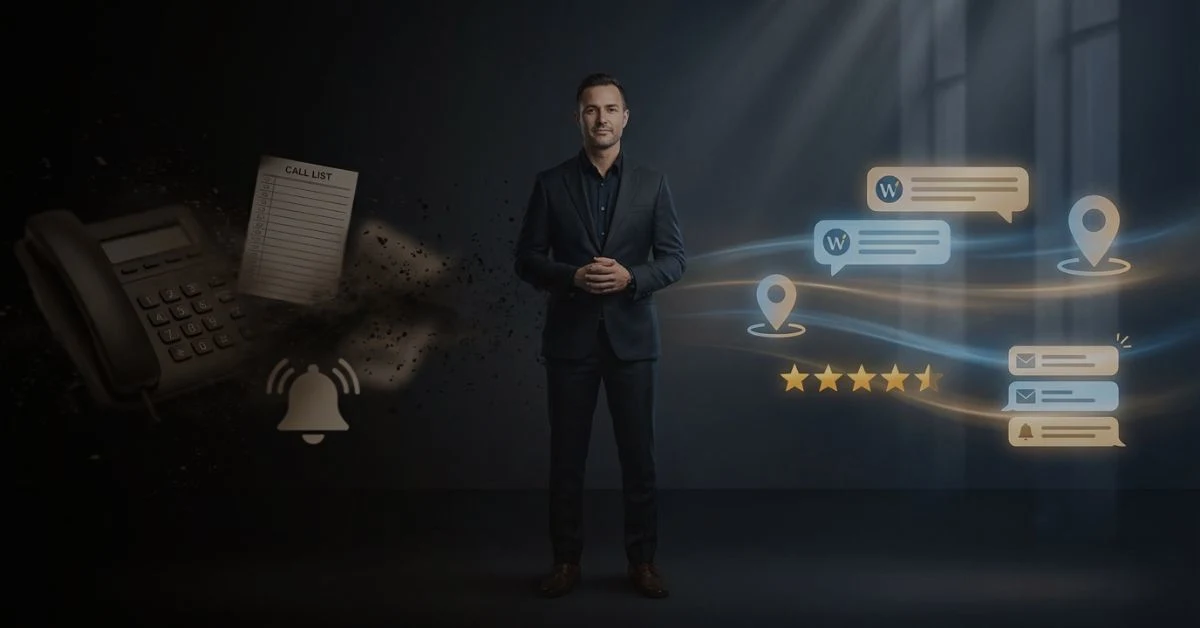
For generations of real estate brokers, it was a daily ritual. Pick up the phone, open a directory of numbers, and start dialing. “Hello sir, are you interested in buying a property?” This was cold calling—a numbers game of brute force. Make a hundred calls, face ninety-nine rejections, and maybe, just maybe, land one lukewarm lead. It was tedious, often demoralizing, but for a long time, it was one of the only ways to proactively find new clients.
Those days are numbered.
In fact, for the modern client, the cold call is more than just an interruption; it’s a red flag. It signals a broker who is desperate, outdated, and out of touch with how people live, communicate, and make decisions today. With Truecaller instantly flagging spam and a generation that prefers a WhatsApp message over an unscheduled call, the effectiveness of cold calling has plummeted.
By 2026, cold calling as a primary client acquisition strategy will be virtually extinct. The brokers who thrive will not be the ones with the longest call lists, but those who have built a system where clients come to them. This isn’t a fantasy; it’s the reality of inbound marketing, and it’s the future of the real estate business.
This blog post explains why the final nail is in the coffin for cold calling and provides a practical roadmap for how you, the modern broker, will attract high-quality clients in 2026 and beyond.
Why Cold Calling Is a Losing Game in the Digital Age
The world has changed, but the cold call hasn’t. It’s an analog tactic in a digital world, and its limitations are becoming painfully obvious.
- It’s Built on Interruption, Not Permission: Cold calling is fundamentally about interrupting someone’s day. You are an uninvited guest in their time. This immediately puts you at a disadvantage, forcing you to fight against a wall of annoyance and skepticism from the very first “hello.”
- Zero Prior Trust: The person on the other end of the line has no idea who you are. You have no credibility, no reputation, and no relationship with them. You are just another anonymous salesperson. In an industry where trust is everything, starting with a trust deficit of 100% is a recipe for failure.
- Incredibly Inefficient: The conversion rate for cold calling is notoriously low. Studies have shown that it can take, on average, over 8 call attempts to even reach a prospect. The amount of time and energy spent for such a minimal return is simply not a sustainable business model in the long run.
- It Attracts the Wrong Kind of Attention: Today’s consumer is highly protective of their privacy. Unsolicited calls are often perceived as spammy and intrusive. Instead of building a positive brand, you risk damaging your reputation and being flagged as a nuisance.
Think about your own behavior. When was the last time you happily took a call from an unknown number trying to sell you something? Exactly. Your clients feel the same way.
The New Model: From Hunting to Farming (Inbound Marketing)
If cold calling is “hunting” for clients, then inbound marketing is “farming.” Instead of chasing down every possible lead with a spear, you are cultivating a fertile field where clients grow naturally and come to you when they are ready.
Inbound marketing is a strategy focused on attracting customers through relevant and helpful content, adding value at every stage in your customer’s buying journey.
The Core Idea: Instead of pushing your message out to a broad, uninterested audience, you pull your ideal clients in by creating content that solves their problems and answers their questions.
Cold Calling vs. Inbound Marketing: The Ultimate Showdown
| Factor | Cold Calling (The Old Way) | Inbound Marketing (The New Way) |
| Approach | Interruption-based (“Push”) | Permission-based (“Pull”) |
| Client Mindset | Annoyed, skeptical, uninterested | Interested, engaged, actively seeking solutions |
| Trust Level | Starts at zero | Built over time before the first conversation |
| Lead Quality | Very low; mostly unqualified | Very high; clients are pre-educated and motivated |
| Scalability | Linear (more calls = more work) | Exponential (one piece of content works 24/7) |
| Long-Term Asset | None. Every day starts from scratch. | Builds a powerful personal brand and content library. |
| Broker Perception | Annoying salesperson | Helpful expert and trusted advisor |
The shift is clear. The future doesn’t belong to the best cold caller; it belongs to the most helpful and visible expert.
How to Build Your Inbound Client Attraction Engine: A 4-Step Guide
So, how do you actually do this? How do you get clients to come to you? It’s about strategically building your presence where your clients are already spending their time: online.
Step 1: Build Your “Digital Office” — Your Professional Hub
Every broker needs a professional, trustworthy online presence. This is your digital office, the home base for your personal brand. It’s where potential clients can learn about you, see your expertise, and verify your credentials.
This doesn’t have to be a complex website. It can be a well-crafted, comprehensive profile on a trusted real estate platform. For example, a verified profile on Sirfbroker acts as a powerful digital hub. It provides a space to showcase your photo, your experience, your areas of specialization, client reviews, and the content you create. It tells a potential client, “This is a serious professional, not a random number from a call list.”
Your digital office must communicate trust at a glance.
Step 2: Become a “Problem-Solver” — Create Helpful Content
This is the engine of your inbound strategy. You need to create content that addresses the real questions and concerns of your target audience. Your goal is to become the go-to resource for anyone thinking about real estate in your niche.
Content Ideas Your Clients Are Actually Searching For:
- “Buying ka process kya hai?” Create a simple, step-by-step checklist or video explaining the home buying process from search to registration.
- “Is Location X a good place to invest?” Create a neighborhood guide video, highlighting the pros and cons, upcoming infrastructure, and lifestyle of a specific area.
- “How do I get the best home loan?” Write a blog post or create an Instagram Reel on “5 Tips to Improve Your Home Loan Eligibility.”
- “Red flags to look for in property documents.” This is an invaluable piece of content that instantly positions you as a knowledgeable and trustworthy advisor.
You don’t need to be a professional writer or videographer. Just be authentic and helpful. Your existing knowledge is the most valuable tool you have.
Step 3: Distribute Your Content — Go Where Your Clients Are
Creating content is half the battle; the other half is making sure people see it. Choose one or two social media platforms where your target audience is most active and focus your efforts there.
- Instagram/YouTube Shorts: Perfect for visual content like property tours, neighborhood guides, and quick tips. A 60-second Reel can reach thousands of potential clients in your city organically.
- LinkedIn: Ideal if you specialize in commercial properties or high-end residential real estate. Use it to share market analysis, investment insights, and professional success stories.
- WhatsApp: Don’t underestimate the power of your existing network. Create a WhatsApp channel or broadcast list where you share your most valuable content with past clients and contacts. This is a powerful way to generate referrals.
The key is consistency. Post regularly, engage with comments, and become a familiar, trusted face in your audience’s feed.
Step 4: Capture and Nurture — The Gentle Follow-Up
As people engage with your content, they will start reaching out. A comment on your video, a direct message on Instagram, or an inquiry through your Sirfbroker profile—these are warm leads. They are infinitely more valuable than a cold call lead.
Your follow-up here is not a hard sell. It’s a continuation of the helpful conversation you’ve already started.
- Instead of: “When can you do a site visit?”
- Try: “Thanks for your question on my video! It’s a great point. I have a bit more detailed info on that topic if you’re interested. Happy to share it over a quick chat when you have a moment.”
You are guiding, not pushing. You are building on the trust you have already established. This approach leads to higher quality conversations and a much higher conversion rate. This is where a modern platform becomes essential, providing you with the tools to manage these inbound leads and nurture them effectively.
The Broker of 2026: An Educator and Community Builder
The profile of a successful broker is changing. The lone wolf with a phone and a list is being replaced by the community-building educator.
The broker of 2026 understands that their job is not just to facilitate transactions, but to empower clients with information. By generously sharing their expertise, they build a reputation and a brand that attracts a steady stream of high-quality, pre-qualified clients. They spend less time chasing and more time advising, consulting, and closing deals with people who already trust them.
This isn’t just a more effective way to do business; it’s a more rewarding one. It frees you from the soul-crushing grind of cold calling and allows you to build a career based on your knowledge, your reputation, and the genuine value you provide. The transition starts with a mindset shift: stop selling, and start helping.
Ready to leave cold calling behind and build a modern, attraction-based real estate business? Create your professional profile on Sirfbroker today and start connecting with clients who are looking for experts they can trust.