

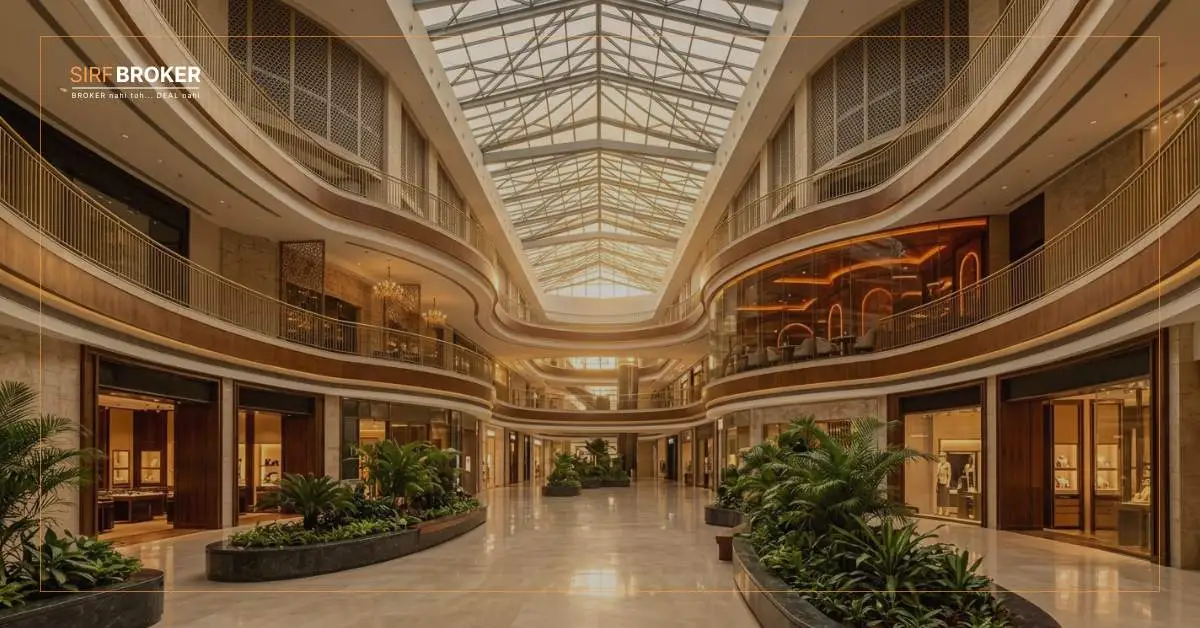
India’s organised retail real estate market is in the middle of its largest single-year supply addition in recent memory. According to Cushman & Wakefield India’s “Premiumisation of India’s Retail Sector” report, 16.6 million square feet of Grade A mall space is expected to come online across the top seven cities by the end of 2026 — with Hyderabad and Delhi-NCR accounting for approximately 65% of that new supply.
Retail leasing is expected to reach 10–11 million square feet for the full year 2026 — a record. Mumbai’s premium mall rentals appreciated 15–20% year-on-year. Phoenix Mills reported retail consumption of ₹16,587 crore in FY26, up 21% year-on-year.
The structural story is not that Indian consumers are spending more — though they are. It is that the Indian mall has fundamentally repositioned as a full-day destination: fashion, food, entertainment, luxury, gaming, premium F&B, and experiential retail coexisting under one roof. That repositioning has changed the economics of what a Grade A mall can deliver — and what it costs to build one that qualifies.
| 16.6 MSF of Grade A mall supply expected in India’s top seven cities in 2026. Retail leasing to hit a record 10–11 MSF. Mumbai premium mall rentals up 15–20% YoY. Phoenix Mills FY26 retail consumption: ₹16,587 crore (+21%). India’s retail real estate market is in its most active development phase since pre-2008. |
What Is Driving the Premiumisation Wave
India’s consumer base is undergoing documented income stratification. The population earning ₹1 crore+ annually is growing at 14–18% per year. Near-affluent households earning ₹30 lakh+ are growing at 7–11% per year. This is the primary tenant demand driver for Grade A retail.
| WHAT PREMIUM RETAIL TENANTS REQUIRE FROM DEVELOPERS IN 2026 Luxury zone with dedicated access → International luxury brands require dedicated zones with controlled footfall, separate entrances, and specific lighting and security infrastructure. A developer who hasn’t designed this from the start cannot retrofit it credibly. F&B as destination anchor → Premium F&B has replaced cinema as the footfall anchor in best-performing malls. Developers allocating 20–25% of GLA to premium F&B and entertainment are outperforming those who treat it as afterthought. Experiential and wellness → Gyms, spas, gaming zones, and family entertainment centres are now core to Grade A tenant mix — not optional. Long lease terms and strong footfall halo effects for surrounding retail. Digital infrastructure → Premium retailers require high-bandwidth connectivity, smart parking, app-integrated loyalty infrastructure, and EV charging. Malls without this are being passed over for newer Grade A developments. |
The City Breakdown — Where the Supply Is Coming
| City | 2026 Retail Activity | Developer Opportunity |
|---|---|---|
| Hyderabad | Part of the 65% of new 2026 supply. Strong luxury and F&B expansion. | High — state government infrastructure support + strong affluent consumer base |
| Delhi-NCR | Part of the 65% of new 2026 supply. Luxury leasing concentrated in Gurugram premium malls. | High — deepest luxury consumer base outside Mumbai |
| Mumbai | Rentals +15–20% YoY. Limited new supply. Phoenix Mills dominant operator. | Existing assets repricing. New development constrained by land cost. |
| Bengaluru | Strong retail demand from GCC workforce — high disposable income, young demographic. | Well-positioned for premium retail and food hall concepts in ORR corridor |
| Pune / Chennai | Existing Grade A malls at near-full occupancy. | Undersupplied — development opportunity for the right product |
The Revenue Model Has Changed
| Phoenix Mills’ ₹16,587 crore retail consumption in FY26 (+21% YoY) is the clearest data point on what the revenue-share model delivers at scale. A mall structured with revenue-share leases captures upside when consumer spending grows. Developers building new Grade A retail should design leasing structures with revenue-share capability from day one. |
For developers evaluating how retail assets fit within a broader portfolio, the overview of how REITs are changing real estate investment in India covers the asset characteristics that listed retail REITs look for at acquisition.
Sirf Broker POV
India’s retail real estate market has been dismissed as the underperformer of the commercial property asset class for the past several years. The 2026 data argues otherwise.
The fundamental shift is that Indian retail real estate is no longer competing against e-commerce. It is competing for a different type of consumer visit — the one e-commerce cannot replicate. A curated Sunday afternoon in a premium mall with luxury brand discovery, a restaurant reservation, and a film is not a transaction that happens on a phone screen.
The risk is on the supply side. 16.6 MSF of new Grade A supply in a single year is a large addition. Grade A malls with the right tenant mix and experience infrastructure are performing at record levels. Grade B and C malls are losing tenants to new Grade A product. Developers who build to Grade A standards in under-served markets have a genuine opportunity. Developers who build to Grade B standards in crowded markets do not.
Conclusion
India’s premium retail real estate market in 2026 is in its most active development phase in a decade — 16.6 MSF arriving, record leasing velocity, rental appreciation, and a consumer base growing into luxury and experiential spending at scale. The mall that wins in 2026 is a full-day destination, not a shopping centre.
Frequently Asked Questions
1. How much new retail mall supply is coming in India in 2026?
16.6 million square feet of Grade A mall space is expected across India’s top seven cities in 2026 per Cushman & Wakefield India. Hyderabad and Delhi-NCR account for approximately 65% of this new supply.
2. What is the retail leasing outlook for India in 2026?
Total retail leasing expected to reach 10–11 MSF in 2026 — a record. Mumbai’s premium mall rentals appreciated 15–20% YoY, reflecting strong demand against limited new supply.
3. How is the Indian mall market changing in 2026?
Malls are repositioning as full-day destinations: fashion, luxury, premium F&B, entertainment, wellness, and experiential retail. Premium F&B has replaced cinema as the primary footfall anchor. A two-tier market is forming between Grade A experience malls and legacy Grade B/C product.
4. What did Phoenix Mills report for FY26?
Phoenix Mills reported retail consumption of ₹16,587 crore in FY26, up 21% YoY — the strongest annual performance for India’s largest mall operator.
5. What are luxury brands looking for in Indian retail real estate in 2026?
Dedicated zones with controlled footfall, separate entrances, specific lighting and security. Jewellery brands accounted for 11% of retail leasing in H1 2025. Luxury tenants require a defined luxury precinct designed from project inception.
6. Which Indian cities offer the best retail real estate development opportunity in 2026?
Hyderabad and Delhi-NCR are leading 2026 supply. Mumbai offers highest rents but limited development opportunity. Pune and Chennai are undersupplied — existing Grade A malls are near-full — creating genuine development opportunity.
7. What revenue model should developers use for premium retail in India?
Revenue-share leasing — fixed minimum guarantee plus revenue share above a turnover threshold — is standard for premium tenants. Phoenix Mills’ FY26 results demonstrate what this model delivers at scale.
Sources
- Cushman & Wakefield India — “Premiumisation of India’s Retail Sector” Report 2026 — 16.6 MSF Grade A supply, Hyderabad/Delhi-NCR 65%, 10–11 MSF leasing forecast, Mumbai rentals +15–20% YoY. cushmanwakefield.com/india
- Phoenix Mills FY26 Annual Results — Retail consumption ₹16,587 crore (+21% YoY). phoenixmills.co.in
| Disclaimer: Published by Sirf Broker for educational purposes only. Not investment advice. All data from publicly available reports cited above. |