

On July 2, 2026, BSE Index Services launched the BSE REIT and InvIT Index — the first benchmark of its kind for India’s listed real estate investment trust and infrastructure investment trust universe. If that sentence reads like a capital markets update that has nothing to do with your day-to-day as a broker or developer, read on. It does.
A benchmark index does something simple and consequential: it gives institutional investors a standardised way to measure, track, and invest in an asset class. Before July 2, a fund manager asking “how is Indian real estate performing as an asset class on the listed markets?” had no single, clean answer. Now they do. The BSE REIT Index is that answer. And what happens at the institutional level — in terms of capital flows, product development, and investor awareness — eventually arrives at the broker’s desk as deal flow, occupier demand, and asset pricing. This is how markets evolve.
| The BSE REIT and InvIT Index launched July 2, 2026 with 12 constituents — including Embassy, Brookfield, Nexus Select, Phoenix Mills, and Prestige. 1-year return: 11.80%. 3-year return: 23.57%. Source: BSE Index Services. |
What the BSE REIT Index Actually Covers
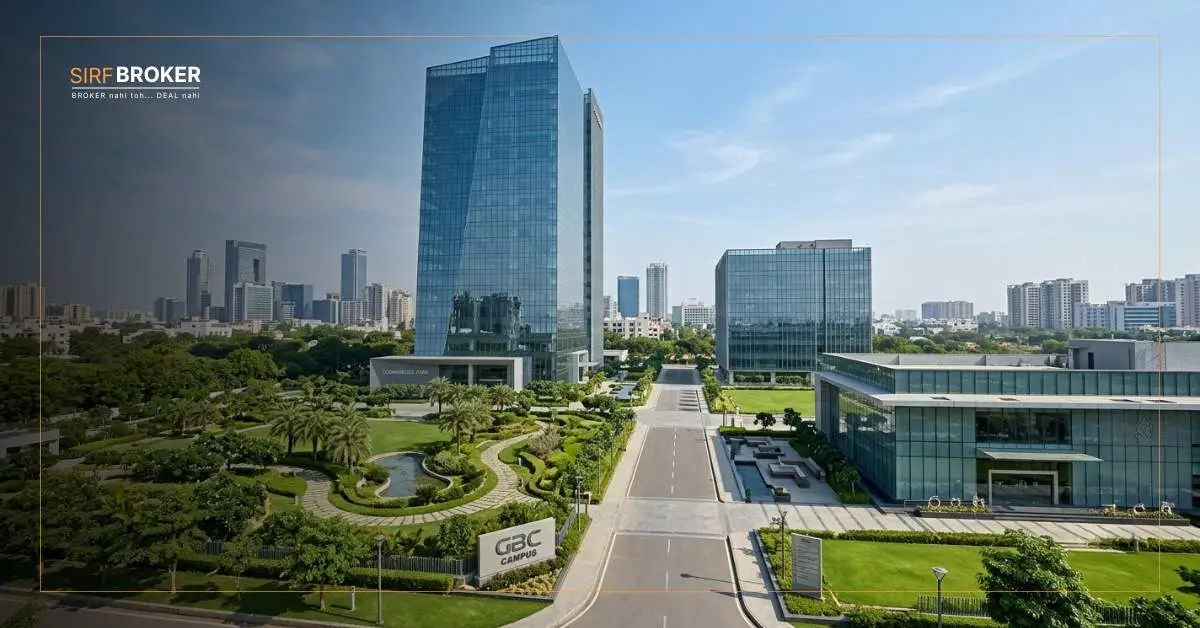
The BSE REIT and InvIT Index launched with 12 constituents across India’s listed real estate and infrastructure trust universe. These are not small instruments — the constituents represent the institutional layer of India’s commercial property market, owning and operating millions of square feet of Grade A office space, retail malls, and infrastructure assets across major Indian cities.
| Constituent | Type | Index Weight | Primary Asset Focus |
|---|---|---|---|
| Embassy Office Parks | REIT | 20.01% | Grade A office, Bengaluru / Pune / NCR |
| Brookfield India REIT | REIT | 17.23% | Grade A office, Mumbai / NCR / Kolkata / Pune |
| Nexus Select Trust | REIT | 15.69% | Retail malls, 17 cities across India |
| Phoenix Mills | REIT | 13.11% | Premium retail malls, Mumbai / Pune / Bengaluru |
| Prestige Estates | REIT | 9.49% | Office + retail + residential, Bengaluru-anchored |
| Remaining 7 constituents | REIT / InvIT | 24.47% | Office, infrastructure, and diversified assets |
The top five constituents — Embassy, Brookfield, Nexus Select, Phoenix Mills, Prestige — account for 75.53% of the index weight. This concentration reflects the actual ownership structure of India’s institutionally-owned commercial real estate: a small number of large, well-capitalised vehicles dominate the market by square footage.
What the Returns Say — and What They Don’t
The BSE REIT Index carries a 1-year return of 11.80% and a 3-year return of 23.57%, per BSE Index Services data. These numbers deserve a careful read — not because they are surprising, but because context changes how useful they are.
| READING THE REIT RETURNS: THREE THINGS TO KNOW 1. REIT returns include distributions, not just price appreciation. India’s REITs are required to distribute 90% of net distributable cash flows to unitholders — so the total return includes quarterly distributions. This makes direct price comparison to equity benchmarks like Nifty misleading without adjusting for payout structure. 2. The 3-year return (23.57%) was earned in a period of strong Grade A office demand. India’s GCC-driven office absorption, sub-10% vacancy in premium corridors, and rent escalation all underpinned REIT performance. Whether that momentum continues depends on GCC expansion plans and global economic conditions. 3. This is a real-return benchmark — which makes it more useful than private market valuations. Unlike the self-reported valuations used in private real estate, index performance reflects market prices set by buyers and sellers every trading day. This transparency is the primary institutional value of the index. |
For context on how GCC-driven demand has shaped the Grade A office market that underpins most REIT portfolios, read: India’s GCC Boom and What It Means for Office Demand Through 2030.
What an Index Launch Changes for the Broader Market
A benchmark index is infrastructure — it enables products and flows that weren’t possible before. The most direct consequence is passive investment products. Once an index exists, asset managers can build index funds and ETFs that track it — bringing in retail and institutional capital that wants exposure to Indian real estate without the complexity of buying individual REIT units. This is how REIT markets in Singapore, the US, and the UK expanded beyond the early-adopter institutional audience: the index enabled the ETF, and the ETF broadened the investor base.
The second consequence is performance accountability. With a public benchmark, REIT managers are now directly measurable against a common standard. Under-performance relative to the index becomes visible and defensible — or not. That accountability pressure typically improves governance over time.
| The third and least-discussed consequence: pricing transparency for the private market. Institutional buyers of unlisted commercial real estate — office parks, large retail complexes, industrial assets — now have a daily-marked reference rate for what similar assets trade at on the listed market. This cap rate transparency compresses the information asymmetry that private market sellers have historically relied on. Better-informed buyers will push back more effectively on inflated private market valuations. |
What Brokers in Commercial Real Estate Should Take From This
Three immediate implications for commercial real estate brokers operating in the segments that overlap with REIT-owned assets — Grade A office, premium retail, and institutionally managed warehousing:
First, institutional occupiers who track REIT performance and ownership are increasingly sophisticated about their landlord’s financial position. When a large occupier is in lease renewal negotiations with an Embassy or Brookfield-managed asset, they know the landlord’s income needs, distribution obligations, and vacancy pressure from public disclosures. Brokers advising occupier clients need to match that sophistication — reading REIT investor presentations and quarterly reports as part of deal preparation, not just floorplan specifications and fit-out costs.
Second, the index creates a new category of client conversation — the investor who wants real estate exposure but doesn’t want property management complexity. REITs are the answer to that conversation. Brokers who can explain how listed REITs work, what Embassy’s portfolio looks like, and how REIT distributions compare to rental yield on a physical asset are offering something competitors who only talk about direct property can’t. To understand how to position REITs for clients who are new to listed property instruments, read: REITs Are Changing Real Estate Investing: What Brokers Must Learn.
Third, index composition signals the concentration of India’s institutionally-owned commercial market. Embassy (Bengaluru / Pune dominant) and Brookfield (Mumbai / NCR / Kolkata) make up 37% of the index. The markets where these portfolios are concentrated are, by definition, the markets with the strongest institutional leasing pipelines and the deepest liquidity for commercial transactions. For brokers deciding where to build commercial expertise, the index composition functions as a market priority map.
Sirf Broker POV
The BSE REIT Index is the right development at the right time — and most brokers in India will underestimate its significance for at least another 12-18 months.
Here is the argument for why it matters more than it initially appears: the index is not just a capital markets product. It is a credibility mechanism for the asset class. India’s retail investor and high-net-worth community has historically treated real estate as a physical asset — something you touch, visit, and negotiate with a lawyer over. The idea of owning “a share of an office park in Bengaluru” felt abstract and risky. An index that benchmarks returns, that can be tracked on a phone like the Sensex or Nifty, that performs at 23.57% over three years with quarterly distributions — that is a different psychological proposition.
As that proposition lands with the wealth management community and eventually with retail investors, the question they will ask their broker is: “Should I buy the REIT or should I buy a physical property?” That question requires a broker who understands both answers — not just the physical side. The brokers who learn the REIT product well now, before it becomes a mainstream conversation, will be the ones giving confident, nuanced answers in 18 months when the ETFs launch and the question becomes common. The brokers who dismiss it as “not property” will be referring that conversation to someone else — and losing client relationships in the process.
The index is not the end of the physical property market. It is the beginning of a more sophisticated conversation about where real estate fits in a portfolio. That conversation requires a more sophisticated broker on the other side of it.
Conclusion
India’s BSE REIT and InvIT Index, launched July 2, 2026, is more than a capital markets milestone. It is infrastructure for the next stage of India’s commercial real estate market — enabling passive investment products, creating performance accountability, and providing transparent benchmarking against private market valuations. For brokers in commercial real estate, the index is a client conversation prompt, a market map, and a signal to expand expertise beyond physical property into listed real estate instruments.
For a detailed breakdown of how to explain REITs to clients and position them alongside direct property, read: REITs Are Changing Real Estate Investing: What Brokers Must Learn. For the commercial leasing fundamentals that underpin REIT income, read: Common Mistakes in Commercial Property Leasing Deals.
Frequently Asked Questions
1. What is the BSE REIT Index India?
The BSE REIT and InvIT Index is India’s first benchmark index for listed real estate investment trusts (REITs) and infrastructure investment trusts (InvITs). It was launched by BSE Index Services on July 2, 2026, and comprises 12 constituents including Embassy Office Parks, Brookfield India REIT, Nexus Select Trust, Phoenix Mills, and Prestige Estates. The index tracks the listed real estate and infrastructure trust universe in India on a daily marked basis.
2. What returns has the BSE REIT Index delivered?
Per BSE Index Services data at launch (July 2, 2026), the BSE REIT and InvIT Index carries a 1-year return of 11.80% and a 3-year return of 23.57%. These returns include both price appreciation and distribution income — India’s REITs are required to distribute 90% of net distributable cash flows to unitholders quarterly, so total return comparisons to pure equity benchmarks need to account for this payout structure.
3. Who are the largest constituents in the BSE REIT Index?
The top five constituents by index weight are: Embassy Office Parks (20.01%), Brookfield India REIT (17.23%), Nexus Select Trust (15.69%), Phoenix Mills (13.11%), and Prestige Estates (9.49%). These five account for approximately 75.5% of the index weight, reflecting the concentrated ownership structure of India’s institutionally-held commercial real estate market.
4. What does the BSE REIT Index mean for commercial real estate brokers?
The index enables several things relevant to brokers: it creates a transparent performance benchmark for institutional commercial real estate; it makes sophisticated occupier clients more informed about their landlord’s financial position (since REIT owners are publicly disclosed); it opens a new category of investor conversation around listed real estate exposure; and it provides a market priority map — the index’s geographic concentration signals where India’s institutionally-backed leasing pipelines are deepest.
5. Will the BSE REIT Index lead to REIT ETFs in India?
The launch of a benchmark index is the standard first step toward passive investment products. In established REIT markets (US, Singapore, Australia), index launch preceded ETF development by a relatively short period. India’s SEBI-regulated product development pipeline would require formal approval for any REIT index ETF or fund-of-fund product, but the index provides the necessary infrastructure. The development of such products would broaden the REIT investor base beyond current active unitholders to retail and institutional passive investors.
6. How does a listed REIT index affect private commercial real estate valuations in India?
A public index provides daily-marked pricing on comparable institutional-quality assets. Buyers of unlisted commercial real estate now have a transparent reference rate for cap rates and asset values derived from the listed market. This pricing transparency reduces the information asymmetry that private market sellers have historically relied on — better-informed buyers will negotiate more effectively, likely compressing the premium that private-market sellers could previously extract without a comparable listed benchmark.
Sources and References
- BSE Index Services — BSE REIT and InvIT Index launch data, July 2, 2026 — 12 constituents; Embassy 20.01%, Brookfield 17.23%, Nexus Select 15.69%, Phoenix Mills 13.11%, Prestige 9.49%; 1-year return 11.80%, 3-year return 23.57%. bseindia.com
- SEBI — REIT Regulations and Disclosure Requirements — 90% distribution requirement for Indian REITs; regulatory framework. sebi.gov.in
- JLL India — India Office Market Reports 2026 — Grade A office performance and GCC-driven absorption underpinning REIT income. jll.co.in
Disclaimer
| This article is published by Sirf Broker for educational and informational purposes only. Index constituent data, weights, and return figures are sourced from BSE Index Services (July 2, 2026) and are subject to revision as the index is rebalanced. This is not investment advice. Past index performance does not guarantee future returns. |