

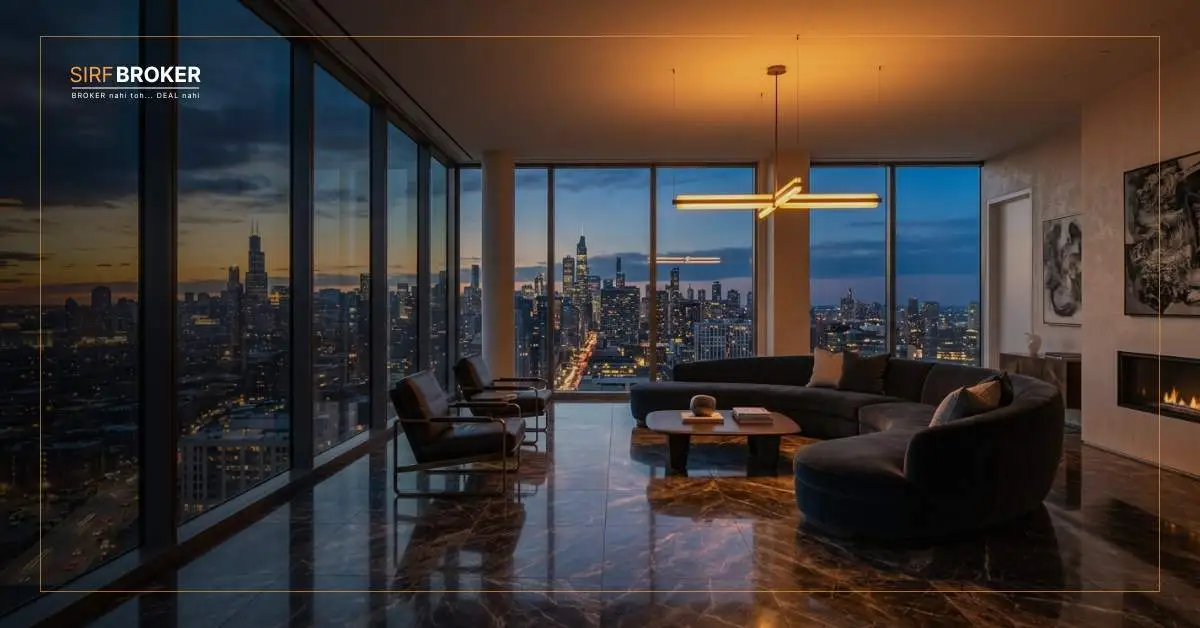
India’s luxury residential real estate market is valued at $64 billion in 2026 and is projected to reach $108 billion by 2031 — a compound annual growth rate of nearly 11%. That trajectory is not driven by aspiration alone. It is driven by a specific, documented, and rapidly growing buyer cohort: India’s ultra-high-net-worth individuals, who now number 13,600 and allocate approximately 32% of their investment portfolios to real estate.
This is not the premium housing story covered in this week’s Q2 2026 residential data. That story is about the ₹1–3 crore buyer. The luxury story is about buyers for whom ₹10 crore is a floor, not a ceiling — and who are purchasing branded residences, private villas, gated estate communities, and managed ultra-luxury apartments as deliberate wealth allocation decisions, not lifestyle upgrades.
For developers, the opportunity is specific. For buyers in this segment, the checklist is different from every other residential transaction in India.
| India’s luxury residential market: $64B in 2026, projected $108B by 2031. 13,600 UHNWIs allocating 32% of portfolios to real estate. Mumbai commands 32% of national premium sales. Branded residences, villas, and gated estates are the fastest-growing sub-segments. This is a wealth-allocation market — not a lifestyle market. |
Who the UHNWI Buyer Is — and What They Want
| THE UHNWI BUYER PROFILE IN 2026 Net worth threshold → ₹50 crore and above. India’s UHNWI population grew 12–15% annually over the past three years, driven by financial-sector wealth, technology entrepreneurship, and inherited family business liquidity events. Portfolio allocation → 32% to real estate — the highest asset class allocation for this cohort. Outpaces equities (28%) and fixed income (18%). Real estate for this buyer is not housing — it is a store of value, a hedge against inflation, and a wealth transfer vehicle. Product preference → Branded residences (international hotel brands), private villas with 5,000+ sq ft land, gated estate communities in urban periphery, and ultra-luxury sky-villas in premium urban towers. Standard apartment-format luxury no longer qualifies for this buyer. Geography → Mumbai (32% of premium sales), South Delhi and Gurugram (gated villa communities), Bengaluru (tech-wealth driven), and emerging markets: Goa, Alibaug, and Kasauli for second-home and estate purchases. |
The Four Luxury Sub-Segments Driving 2026 Growth
| Sub-Segment | Price Range | Growth Driver | Key Markets |
|---|---|---|---|
| Branded Residences | ₹15–80 crore | International brand affiliation, managed services, global resale liquidity | Mumbai, Delhi-NCR, Bengaluru |
| Gated Villa Communities | ₹5–25 crore | Privacy, land ownership, post-COVID space preference | Gurugram, South Delhi, Hyderabad, Bengaluru periphery |
| Ultra-Luxury Sky-Villas | ₹20–100+ crore | Constrained urban land, altitude premium, trophy asset positioning | Mumbai (South, BKC), Delhi (Lutyens periphery) |
| Second Homes / Estates | ₹3–15 crore | UHNWI lifestyle diversification, rental yield from managed hospitality | Goa, Alibaug, Kasauli, Ooty, Coorg |
What Developers Must Get Right — The UHNWI Checklist
| A developer who builds a ₹20 crore apartment and calls it ultra-luxury without the following elements will not attract the UHNWI buyer — who has either lived in a comparable international product or researched it exhaustively. |
1. International brand or architect association. Branded residences — properties affiliated with Four Seasons, Ritz-Carlton, Oberoi, Armani, or equivalent — command a 30–40% price premium over unbranded luxury in comparable locations. The brand signals managed services, global recognition, and resale liquidity to an international buyer pool.
2. Private lift lobbies. One lift per floor, or private lobby access. Shared lift lobbies are a disqualifier for serious UHNWI buyers. This is a structural design requirement that cannot be retrofitted.
3. Minimum unit size 4,000+ sq ft. The sub-4,000 sq ft product marketed as luxury does not compete for the UHNWI buyer. Large format — sky-villas of 6,000–15,000 sq ft — are the preferred configuration.
4. Concierge and managed services. The UHNWI buyer expects hotel-grade concierge, housekeeping, security, and property management either through the developer or a contracted operator. This is a recurring revenue opportunity for developers who build it into the product model.
5. Title and legal clarity. UHNWI buyers — particularly those with international residences or family offices — conduct rigorous legal due diligence. Title encumbrance, delayed RERA registration, or litigation history immediately disqualify a project. The property verification checklist covers the foundational documents that need to be clean before any luxury transaction proceeds.
Mumbai vs. Delhi-NCR vs. Bengaluru — The UHNWI City Matrix
| City | UHNWI Buyer Profile | Preferred Product | Price Ceiling |
|---|---|---|---|
| Mumbai | Financial sector, entertainment, legacy wealth | Sky-villas, branded residences, sea-facing towers | No ceiling — ₹200+ crore transactions documented |
| Delhi-NCR (Gurugram) | Political, industrial, family business wealth | Gated villa communities, private bungalows, Lutyens periphery | ₹50–100 crore for top-tier villa plots |
| Bengaluru | Tech-sector wealth, GCC executives, startup founders | Large-format apartments, gated villa phases, second homes in Coorg | ₹10–30 crore primary; second homes ₹3–8 crore |
| Hyderabad | Pharma, tech, and real estate wealth | Jubilee Hills, Banjara Hills villas, Kokapet premium towers | ₹8–25 crore |
Sirf Broker POV
India’s luxury real estate market is being misread by most developers still treating it as a price band rather than a buyer profile. A ₹15 crore apartment in a standard tower with a marble lobby is not luxury in 2026. The UHNWI buyer has lived in, visited, or researched the Ritz-Carlton Residences in Miami and the Four Seasons Private Residences in Bangkok. The reference point is global.
The developers who will capture a disproportionate share of India’s $64 billion luxury market are not those who build the most expensive product. They are those who build the most intentional product — where every design decision, service layer, and legal structure has been made with the UHNWI buyer’s specific requirements in mind. Private lobbies. Managed services. Brand association. Architect pedigree. Title clarity. These are not amenities. They are table stakes.
India’s UHNWI population is growing at 12–15% annually. The supply of product that genuinely meets their standard is not growing at the same rate. That gap — between a fast-growing buyer cohort and a slowly improving product standard — is where the developer opportunity sits. It is also where the developer risk sits for those who mistake price for quality.
Conclusion
India’s luxury real estate market in 2026 is a $64 billion allocation decision by 13,600 buyers who treat property as a wealth management tool. Developers who understand that distinction — and build to an international product standard rather than a domestic price ceiling — are positioned to capture a market that will more than double by 2031. For buyers in this segment, the transaction framework is different from any other residential purchase. Begin with title, build with intent.
For luxury and high-value transactions, commission and brokerage documentation becomes especially important. The guide on protecting brokerage commission in real estate transactions covers the structures that hold up in high-value deals.
Frequently Asked Questions
1. What is India’s luxury real estate market size in 2026?
India’s luxury residential real estate market is valued at approximately $64 billion in 2026, projected to reach $108 billion by 2031 at a CAGR of nearly 11%, per MarkWide Research and Mordor Intelligence.
2. How many ultra-high-net-worth individuals are buying luxury real estate in India?
India has approximately 13,600 ultra-high-net-worth individuals (UHNWI — net worth ₹50 crore+), who allocate an average of 32% of their investment portfolios to real estate, making it their largest single asset class allocation.
3. What is a branded residence and why does it command a premium in India?
A branded residence is a luxury property affiliated with an international hotel or lifestyle brand — Four Seasons, Ritz-Carlton, Oberoi, Armani, etc. — that provides managed services, brand credibility, and global resale liquidity. In India, branded residences command a 30–40% premium over unbranded luxury in comparable locations.
4. Which city has the most expensive luxury real estate in India?
Mumbai dominates India’s ultra-luxury market — commanding 32% of national premium sales. South Mumbai sea-facing properties and BKC sky-villas have recorded transactions above ₹200 crore. Delhi-NCR leads in gated villa communities; Bengaluru in tech-wealth-driven luxury apartments.
5. What do UHNWI buyers look for in Indian luxury real estate in 2026?
Private lift lobbies, unit sizes of 4,000+ sq ft, international brand or architect affiliation, concierge and managed services, and clean title with RERA compliance. Standard apartment-format luxury — large units in shared-lobby towers — no longer meets the reference point this buyer cohort uses.
6. Is luxury real estate in India a good investment in 2026?
For the right buyer profile and product, yes — the UHNWI cohort is growing 12–15% annually while supply of genuinely world-class product is limited. The luxury segment grew 30% YoY in Q1 2026 for properties above ₹1 crore per JLL India. However, “luxury” is a heavily misused label — product quality varies enormously.
7. What are the best locations for luxury second homes in India in 2026?
Goa remains India’s leading luxury second-home market. Alibaug (Mumbai proximity), Kasauli and Shimla (Delhi proximity), Coorg and Ooty (Bengaluru) are growing rapidly. Managed hospitality models — where the property generates rental income when unoccupied — are the preferred structure for UHNWI second-home buyers.
Sources
- MarkWide Research — India Luxury Residential Real Estate Market 2026 — $64.21B market value, $107.99B by 2031, 10.95% CAGR. markwideresearch.com
- Whalesbook / UHNWI Data 2026 — 13,600 UHNWIs, 32% portfolio allocation, Mumbai 32% premium sales. whalesbook.com
- JLL India — Residential Dynamics Q1 2026 — Luxury segment (₹1 crore+) grew 30% YoY. jll.co.in
- Mordor Intelligence — India Luxury Residential Market — $42.6B to $112.56B by 2035, 11.40% CAGR. mordorintelligence.com
| Disclaimer: Published by Sirf Broker for educational purposes only. Not investment advice. All data from publicly available reports cited above. |