

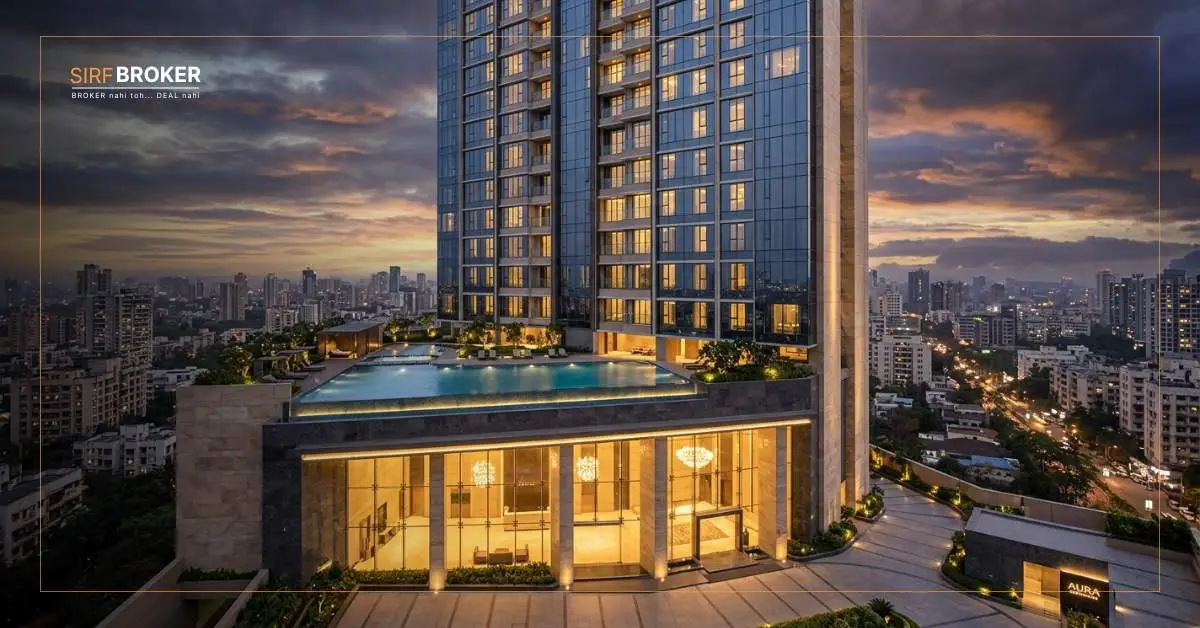
India’s residential real estate market sold approximately 1.71 lakh housing units across eight major cities in the first half of 2026 — a 0.7% increase year-on-year, according to data compiled by Knight Frank India and ANAROCK Research. After four consecutive years of strong post-COVID recovery — where annual sales growth ranged from 15% to 38% depending on the metric and the year — the residential market has entered a stabilisation phase. This is not a collapse. It is maturation.
Within that near-flat aggregate, the premium segment is doing something very different. Homes priced above ₹1 crore now account for 54% of total residential sales in India — up from 49% a year earlier. Knight Frank India reports that luxury homes priced above ₹1.5 crore have crossed 60% of total residential sales — a historic high. Hyderabad has emerged as India’s leading ultra-luxury housing market in terms of growth rate, driven by a specific combination of strong IT sector employment, relatively lower base prices compared to Mumbai and Delhi, and aggressive premium developer launches on the city’s western corridor.
The aggregate market stabilisation and the premium segment surge are not contradictory trends — they are two sides of the same structural shift. Affordable and mid-income housing demand is softening under price appreciation pressure and limited affordability improvement at the lower end of the market. Premium and luxury demand is being sustained and accelerated by the specific demographic — GCC professionals, second-generation business families, NRI investors, HNI buyers — whose real income, wealth accumulation, and homeownership aspiration are all growing regardless of broader market sentiment.
| India Residential Market — H1 2026 at a glance Total sales H1 2026: 1.71 lakh units — up 0.7% YoY (Knight Frank / ANAROCK) · Premium above ₹1 crore: 54% of total sales (up from 49% in H1 2025) · Luxury above ₹1.5 crore: 60%+ of sales (Knight Frank — historic high) · Affordable + mid-income: 46% (declining share) · Hyderabad: leading ultra-luxury growth rate · Q1 2026 launches: 90,023 units, up 13% YoY (JLL) · Premium ₹10M+ launches: up 45% YoY in Q1 (JLL) Source: Knight Frank India 2026; ANAROCK Research; JLL Residential Dynamics Report Q1 2026; NewKerala/Outlook Money aggregating market data. |
What Stabilisation at 0.7% Growth Actually Means
A 0.7% year-on-year increase in housing sales sounds unimpressive. In context, it is precisely what you would expect from a market transitioning from a recovery cycle to a mature growth cycle — and it carries specific implications for how brokers and developers should read the market in H2 2026.
The post-COVID residential surge in India ran from 2021 through 2024 on pent-up demand, low interest rates in the early period, accelerating premiumisation, and a genuine “aspiration upgrade” cycle where buyers who had been renting or living in smaller homes moved decisively toward ownership and larger units. Four years of 15–38% annual growth is not a sustainable baseline — the market was always going to normalise. 0.7% growth in H1 2026 is normalisation, not a warning signal.
The more meaningful data point is the absolute volume: 1.71 lakh units in six months across eight cities is among the highest absolute half-year sales levels India’s residential market has ever seen. The growth rate has normalised because the base has become high, not because demand has collapsed. The distinction matters for how brokers frame market conditions to clients — particularly buyers who are waiting for a price correction that the underlying volume data does not support.
Hyderabad and the Ultra-Luxury Story: Why This City Is Winning the Premium Race
Hyderabad leading India’s ultra-luxury housing growth in 2026 is the data point that most surprises real estate professionals whose market view is anchored to Mumbai and Delhi. Hyderabad’s luxury residential market has outperformed both older metro markets on growth rate — driven by a specific set of factors that create a compelling ultra-luxury environment.
The IT and GCC sector is the foundation. Hyderabad has the second-largest GCC cluster in India after Bengaluru, concentrated in the Hitec City, HITECH City, and Financial District corridors in the city’s western periphery. Senior professionals at these GCCs — with compensation in the ₹50 lakh–2 crore annual range — represent a natural premium residential buyer pool. They are buying in the ₹1.5–5 crore range, which by Hyderabad’s pricing standards puts them in the luxury bracket. The same income in Mumbai or Delhi would buy a mid-market unit.
Price relativity is the second factor. Hyderabad’s premium residential market entry point is significantly lower than Mumbai, Delhi, or even Bengaluru. A 3,000 sq ft premium apartment in Gachibowli or Kokapet that would be ₹4–6 crore in Hyderabad would be ₹10–15 crore in comparable locations in Mumbai or Delhi. The affordable-for-the-income-bracket dynamic has accelerated Hyderabad’s premium absorption, as buyers who could afford only mid-market elsewhere find themselves able to purchase genuinely luxury product.
Developer supply has followed demand intelligence. The leading Hyderabad developers — Prestige, Phoenix, Mahindra Lifespaces, and dominant local players — have committed to premium and ultra-luxury launches in the Kokapet and Financial District corridors that are consistently absorbing above expectations on launch. The supply is meeting the demand and being absorbed, which is the most positive possible market signal for continued developer confidence.
| Price Segment | H1 2026 Share | Trend vs H1 2025 |
|---|---|---|
| Above ₹1 crore (premium) | 54% of total sales | Up from 49% — gaining share rapidly |
| Above ₹1.5 crore (luxury) | 60%+ of total sales (Knight Frank) | Historic high — luxury now majority of market by value and volume |
| Mid-income (₹50 lakh – ₹1 crore) | Shrinking share | Caught between premium aspirations and affordability constraints |
| Affordable (below ₹50 lakh) | Declining sharply | Price appreciation has moved product out of reach; developer launches shifting upward |
What This Means for Residential Brokers Serving Premium Clients
The premium housing market at 54% of total sales — up from 49% a year ago — is the most important structural fact for residential brokers to internalise in 2026. The majority of India’s residential sales by volume are now in the premium and luxury segment. The majority of India’s residential sales by value are even more skewed — above 70% premium. If a residential broker’s book is concentrated in affordable or mid-income housing, they are increasingly in the minority of the market’s transaction value.
Serving premium buyers is a different proposition from serving affordable or mid-market buyers. Premium buyers — whether GCC professionals, second-generation business owners, or NRI investors — have done significant independent research before they engage a broker. They know the market. They know the project quality differences. They know the developer track record. What they are looking for from a broker is not inventory discovery but advisory credibility: does this broker know things I don’t know? Does this broker understand the specific investment angle, the micro-market trajectory, the developer’s execution history, the floor plan and specification differences within the project?
Brokers who show up to premium buyer conversations with a list of projects are being outcompeted by brokers who show up with a specific opinion about which project in which corridor is the best investment for the buyer’s specific profile. Building that advisory depth — not just product knowledge, but genuine market POV — is the distinguishing competency for premium residential brokerage in 2026. For guidance on how to build a brokerage practice that captures premium client relationships, read: From Word-of-Mouth to Online Reputation: The New Era of Real Estate Brokers in Delhi NCR.
Sirf Broker POV
The stabilisation of India’s overall housing market at 0.7% growth is being read by some in the industry as a slowdown signal. It is not. It is the market telling you that the broad-based, everyone-buying, all-segments-up era is over — and the selective, quality-driven, premium-concentrated era has begun.
This matters for brokers in a specific way. The tactics that worked in 2022 and 2023 — where urgency, any inventory, and a basic site visit were enough to close a sale — will not work in 2026’s stabilised market. Buyers are more selective. They have more time. They are comparing more carefully. And they are concentrating on premium and luxury, which means the advisory bar is higher because the stakes are higher.
The broker who wins in 2026’s premium residential market is the one who can do three things that most brokers cannot: first, explain the specific micro-market trajectory of a project corridor — not generically (“this area is developing”) but specifically (“the Kokapet corridor has three infrastructure projects completing in 18 months that will reduce drive time to Hitec City by 12 minutes”). Second, give an honest opinion when a project is not the right choice for a specific buyer profile, and direct the buyer to a better fit. Third, maintain relationships at a quality that means premium buyers call them before they start searching independently — because the broker’s guidance is valued more than any portal’s listings. That is a professional practice, not a salesperson’s workflow. And it is the only model that sustains premium brokerage through a stabilised market.
Conclusion
India’s residential market sold 1.71 lakh units in H1 2026 — up 0.7% year-on-year as the market stabilises after four years of post-COVID growth, per Knight Frank India and ANAROCK Research. Premium homes above ₹1 crore reached a 54% share of total sales (up from 49%), and luxury above ₹1.5 crore crossed 60% — a historic high. Hyderabad has emerged as India’s leading ultra-luxury growth market, driven by GCC professional demand and price relativity advantages versus older metros. The market is not declining — it is maturing. The premium segment is not pausing — it is accelerating.
For residential brokers, 54% premium share is the clearest possible mandate to build genuine premium advisory capability. Inventory knowledge is a commodity. Market perspective, developer credibility assessment, and micro-market trajectory analysis are the advisory skills that premium buyers pay for — and that no portal can provide. To understand how the most successful brokers are building premium client practices in 2026, read: Why Anonymous Brokers Will Struggle in 2026.
Frequently Asked Questions
How many homes were sold in India in H1 2026?
India’s residential real estate market sold approximately 1.71 lakh housing units across eight major cities in H1 2026 — a 0.7% year-on-year increase — per data aggregated by Knight Frank India and ANAROCK Research. The near-flat growth reflects market stabilisation after four consecutive years of post-COVID recovery growth ranging from 15–38% annually.
What share of India’s housing sales in H1 2026 were in the premium segment?
Homes priced above ₹1 crore accounted for 54% of total residential sales in India in H1 2026 — up from 49% in H1 2025 — per Knight Frank India. Luxury homes above ₹1.5 crore have crossed 60% of total sales, a historic high. Premium and luxury together now constitute the majority of India’s residential market by both volume and value.
Why has Hyderabad emerged as India’s leading ultra-luxury housing market?
Hyderabad leads India’s ultra-luxury residential growth in 2026 due to three converging factors: India’s second-largest GCC cluster concentrated in the Hitec City and Financial District corridors, creating a large pool of senior professionals with luxury-level purchasing power; significantly lower entry prices than Mumbai or Delhi — comparable specification apartments are 40–60% cheaper; and aggressive premium developer launches in the Kokapet and Financial District corridors that have consistently absorbed above launch expectations.
Is the 0.7% growth in India’s housing market a sign of decline?
No. 0.7% growth on a base of 1.71 lakh units reflects market stabilisation, not decline. The absolute half-year sales volume remains among the highest India’s residential market has recorded. The slowdown in growth rate reflects a high base from 2022–2024’s recovery cycle and the natural moderation of pent-up demand. The premium segment — now 54% of total sales — continues to grow, indicating that quality demand remains strong while broad-based demand moderates.
What is happening to affordable and mid-income housing in India in 2026?
The affordable (below ₹50 lakh) and mid-income (₹50 lakh–₹1 crore) segments are losing market share as developer launches shift upward toward premium price points and price appreciation has moved product out of the reach of first-time buyers. ANAROCK data from Q2 2026 shows that homes above ₹1 crore are at 71% of total sales (some city-level data) — up from 59% a year earlier — with affordable and mid-income share declining correspondingly.
What should residential brokers do differently in a stabilised market with 54% premium share?
In a stabilised market, premium buyers who account for 54% of sales have more time and are more selective. Tactics that worked in 2022–23 — urgency, broad inventory, quick site visits — are less effective. Brokers serving premium buyers need to build genuine advisory capability: specific micro-market trajectory knowledge, honest developer credibility assessment, floor plan and specification analysis, and maintained relationships that mean premium clients call the broker before they begin independent searching.