

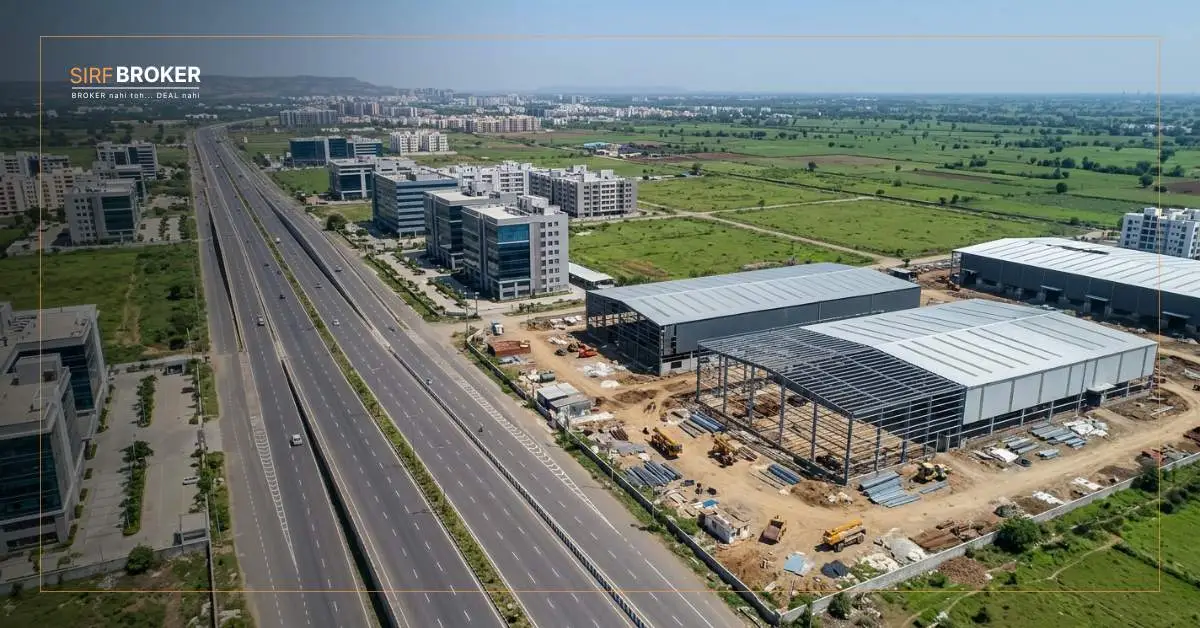
For most of the last two decades, the narrative of Indian real estate has been written in five or six cities. Mumbai, Delhi-NCR, Bengaluru, Hyderabad, Pune, and Chennai — the “top-6” — have dominated investment flows, developer launches, brokerage revenues, and market commentary. Everything else was categorised as “emerging,” a polite term for “not yet serious.”
That characterisation is becoming rapidly outdated. According to Colliers’ H1 2026 India Real Estate Investment Report, Tier II and III cities are experiencing meaningful capital deployment across hospitality, industrial and warehousing, and residential segments. A separate Colliers-CII joint research report has identified 17 specific cities across India as emerging real estate hotspots — driven by infrastructure investment, digitisation of local governance, spiritual tourism, and industrial corridor development. These are not aspirational projections; they are backed by active institutional capital commitments in H1 2026.
The cities on Colliers’ radar include Coimbatore, Indore, Lucknow, Nagpur, Bhubaneswar, Kochi, Jaipur, Ahmedabad, Surat, Kanpur, Patna, and Visakhapatnam — alongside hospitality-led markets like Ujjain and Coorg. Each city has a specific demand driver: some are manufacturing and industrial hubs, some are emerging technology and BFSI centres, some are pilgrimage tourism destinations seeing hospitality capital. Understanding which driver applies to which city — and what each driver means for the types of brokerage transactions that will follow — is what this article is about.
| Tier-2 Cities Real Estate — Key Data Points Cities identified as hotspots (Colliers-CII report) 17 cities Tier II/III share of industrial & warehousing InvIT portfolio ~51% (Colliers) Projected industrial space growth in Tier 2/3 cities More than 6x (Colliers) Grade A warehousing target nationally by 2030 0.5 billion sq ft (Colliers) Annual industrial/warehousing demand projection 30–40 million sq ft p.a. (Colliers) H1 2026 capital deployment (Tier II/III cities) Active — hospitality, industrial, residential (Colliers) |
The Infrastructure Transformation That Is Making Tier-2 Cities Real
The single most important driver of Tier-2 city real estate growth is not demand — it is infrastructure. Every previous wave of “Tier-2 opportunity” commentary in Indian real estate has foundered because connectivity was inadequate: roads, logistics networks, reliable power, and digital infrastructure were not at the level required for businesses and residents to make long-term commitments. That constraint is dissolving, city by city, through a combination of central government investment and state-level infrastructure programs.
Expressways and national highway upgrades are the most visible piece of this. Cities like Lucknow, Indore, Nagpur, and Surat now have significantly improved road connectivity to major manufacturing and consumption hubs that has reduced last-mile logistics costs and made industrial location decisions outside top-6 cities genuinely viable. The Delhi-Mumbai Industrial Corridor, the Amritsar-Kolkata Industrial Corridor, and associated logistics nodes are creating new industrial geographies that were inaccessible five years ago.
Dedicated Freight Corridors — the Eastern and Western DFC — are transforming the economics of manufacturing and warehousing for companies that need reliable, high-volume goods movement. Cities along the DFC routes are experiencing a wave of industrial investment because the cost of moving goods from factory to port or consumption centre has dropped materially. Ludhiana, Kanpur, Nagpur (the intersection of national highway and rail corridors), and Jaipur are among the markets benefiting most directly from this infrastructure shift.
Multi-Modal Logistics Parks (MMLPs) — being developed under the PM Gati Shakti programme — are creating hub-and-spoke logistics networks anchored in Tier-2 and Tier-3 cities. Each MMLP represents a significant industrial real estate opportunity in its surrounding area: warehousing, light industrial, cold chain, ancillary commercial, and eventually residential for the workforce. Brokers who understand which MMLPs are under development, and in what phase, can identify industrial real estate opportunities 18–36 months before they become visible to the broader market.
The 17 Cities and What Each Is Actually Good For
Colliers’ identification of 17 emerging hotspots is not a uniform ranking. Each city has a distinct demand driver, which determines which types of real estate transactions are most likely to materialise there — and therefore which type of broker relationship is most valuable to build.
| City | Primary Demand Driver | Asset Class Opportunity | Timeline |
| Coimbatore | Manufacturing, textile, Engineering R&D | Industrial, Satellite office, Residential | Active now |
| Indore | Industrial corridors, DMIC, Smart City | Industrial, Logistics, Residential | Active now |
| Kochi | Technology, BFSI, Port logistics, NRI | Office, Residential, Hospitality | Active now |
| Lucknow | Government offices, BFSI expansion, Expressway | Office, Residential, Retail | 18–36 months |
| Nagpur | Zero-Mile City logistics, MIHAN SEZ, DFC | Industrial, Logistics, Warehousing | Active now |
| Jaipur | Tourism, Retail, Aerospace manufacturing | Hospitality, Retail, Residential | 18–36 months |
| Visakhapatnam | Port, Pharma, Defence, Tourism | Industrial, Hospitality, Residential | 18–36 months |
The Warehousing and Industrial Opportunity: Why Tier-2 Is Already 51% of the Market
The most concrete evidence that Tier-2 cities have already crossed from “emerging” to “arrived” is in the industrial and warehousing segment. According to Colliers’ data, Tier II and III markets currently account for approximately 51% of the industrial and warehousing InvIT portfolio — meaning that listed investment vehicles holding institutional-quality industrial real estate are already majority-Tier-2 in their geographic composition.
This is a market that has often been written about as a future opportunity. The data says it is already the present. Colliers projects that industrial and warehousing space in Tier-2 and Tier-3 cities will grow more than 6x over the coming years, driven by annual demand of 30–40 million sq ft nationally and Grade A warehousing stock targeting 0.5 billion sq ft by 2030. A significant portion of this growth will come from cities that are not in India’s traditional real estate consciousness: Hosur (for EV and auto manufacturing supply chains), Coimbatore (textile and engineering), Nagpur (logistics hub for central India), and Surat (diamond, textile, and export manufacturing).
For brokers, the industrial and warehousing segment in Tier-2 markets offers a specific opportunity that is under-served by existing brokerage infrastructure. Most industrial real estate in these markets is still transacted through informal, relationship-based channels — local brokers with builder connections, not professional real estate advisory firms. As institutional occupiers — large e-commerce companies, 3PL providers, FMCG manufacturers — expand their Tier-2 warehousing footprint, they will increasingly require professional brokerage services with market knowledge, legal competence, and the ability to conduct due diligence on industrial properties. This is a genuine white-space opportunity for well-prepared brokers.
The Opportunity and the Honest Risk Assessment
The Tier-2 opportunity is real. The risk is also real, and it is worth naming directly. Markets that are in the early stages of formalisation have characteristics that make brokerage more difficult, not less: thinner transaction volumes mean fewer comparable deals to price against; client sophistication is often lower than in metros, meaning more education is required per transaction; legal and documentation infrastructure can be less developed; and first-mover advantage, while real, requires patience — a market that will be active in 36 months is not the same as a market that will generate income this quarter.
The brokers who will succeed in Tier-2 markets are not those who move there to escape competition in metros. They are those who make a deliberate strategic investment in a specific market: learning its geography deeply, building relationships with local developers and landlords, understanding the specific buyer and occupier profile of that city, and committing to be present in that market consistently over a 24–36 month period. Tier-2 success cannot be built from a Mumbai or Delhi office with occasional site visits. It requires genuine local presence or a deeply trusted local partner.
Sirf Broker POV: First-Mover Advantage in Tier-2 Cities Is Real — And It Has a Limited Window
Here is something that rarely gets said clearly in real estate market commentary: the best time to establish a professional presence in a Tier-2 city is before the big brokerage firms open their offices there. Once JLL or CBRE or Colliers opens a Tier-2 office — which typically happens once a market crosses a certain threshold of institutional transaction volume — the dynamics shift. The large firms bring brand recognition, institutional client relationships, and marketing resources that independent or smaller brokers cannot match on those terms. The window for an independent broker to become the recognised name in a Tier-2 market is the 24–36 month period before the market is considered “arrived” by the large platforms.
According to Colliers’ data, cities like Coimbatore, Kochi, Indore, and Nagpur are actively receiving institutional capital now. Lucknow, Jaipur, and Visakhapatnam are on an 18–36 month trajectory. In each of these cities, there is currently a professional brokerage vacuum — local practitioners who know the market but may lack the institutional knowledge and presentation standards that larger occupiers and investors expect, and national firms who are watching from a distance but have not yet committed resources. That vacuum is the opportunity.
Brokers who establish genuine expertise, local presence, and a documented track record in these markets in the next 18–24 months will have a significant and durable competitive advantage. The window is open. It will not remain open indefinitely.
Conclusion
Tier-2 cities are no longer a future promise in Indian real estate. They are a present reality — backed by institutional capital, infrastructure investment, and a demographic and economic shift that is distributing growth more broadly across India’s urban hierarchy than at any time in the country’s recent history. For brokers willing to invest in local knowledge and early positioning, the opportunity is substantial and the competition is currently limited.
To understand how brokers are building practices that extend beyond their home city, read our coverage of the new broker reality in India and why anonymous brokers will struggle in 2026 — the same principles that apply to metro markets apply, with even greater intensity, to Tier-2 markets where relationships are the primary currency.
Frequently Asked Questions
Which Tier-2 cities in India are emerging as real estate hotspots in 2026?
According to a joint Colliers-CII report, 17 cities have been identified as emerging real estate hotspots. The most active in 2026 include Coimbatore (manufacturing and engineering), Indore (industrial corridors and smart city development), Kochi (technology, BFSI, and NRI demand), Nagpur (logistics and MIHAN SEZ), and Jaipur (hospitality, retail, and aerospace manufacturing). Additional cities on an 18–36 month trajectory include Lucknow, Visakhapatnam, Surat, and Kanpur.
What is driving real estate growth in India’s Tier-2 cities in 2026?
The primary drivers are infrastructure investment — expressways, Dedicated Freight Corridors, Multi-Modal Logistics Parks — that has reduced the cost of doing business outside top-6 cities. Industrial corridor development under PM Gati Shakti, digital infrastructure improvement, and state-level policy incentives for manufacturing investment are complementary drivers. Specific cities also have unique demand anchors: Kochi has NRI demand and technology sector growth; Coimbatore has manufacturing and engineering depth; Nagpur has a unique logistics geography as India’s geographic centre.
What asset classes offer the best broker opportunity in Tier-2 cities?
Industrial and warehousing real estate offers the most immediately active opportunity — Colliers’ data shows Tier II/III cities already account for 51% of industrial and warehousing InvIT portfolios. Residential real estate in markets where employment growth is driving in-migration (Coimbatore, Kochi, Indore) is the second priority. Hospitality real estate in tourism and pilgrimage markets (Ujjain, Jaipur, Coorg) is a more specialised opportunity. Satellite office space is emerging in markets with large talent bases like Coimbatore, Kochi, and Bhubaneswar.
What is the industrial and warehousing outlook for Tier-2 cities in India?
Colliers projects that industrial and warehousing space in Tier-2 and Tier-3 cities will grow more than 6x over the coming years. Annual national demand is projected at 30–40 million sq ft, with a Grade A warehousing target of 0.5 billion sq ft by 2030. Institutional investors — including listed InvITs — are already majority-Tier-2 in their industrial portfolio composition, indicating that the formalisation of these markets is well underway rather than aspirational.
What risks should brokers consider before entering Tier-2 real estate markets?
Key risks include: thinner transaction volumes making income inconsistent in the early period; less developed legal and documentation infrastructure requiring more due diligence effort per deal; client sophistication that may be lower than metro markets, requiring more education and hand-holding; and the time horizon required — success in Tier-2 markets typically requires 24–36 months of consistent presence and relationship building before meaningful deal flow materialises. Brokers should approach Tier-2 as a strategic investment with a defined time horizon, not as a quick revenue alternative to a slower metro market.
When is the best time to establish a broker presence in India’s Tier-2 cities?
The optimal window is before institutional capital fully matures in a market — typically 18–36 months before the major national brokerage firms open local offices. Based on Colliers’ H1 2026 data, Coimbatore, Kochi, Indore, and Nagpur are active now. Lucknow, Jaipur, and Visakhapatnam appear to be on an 18–36 month trajectory. The professional brokerage vacuum in these markets — where institutional occupier expectations exceed local brokerage capabilities — is the specific opportunity that well-prepared brokers can capture in this window.