

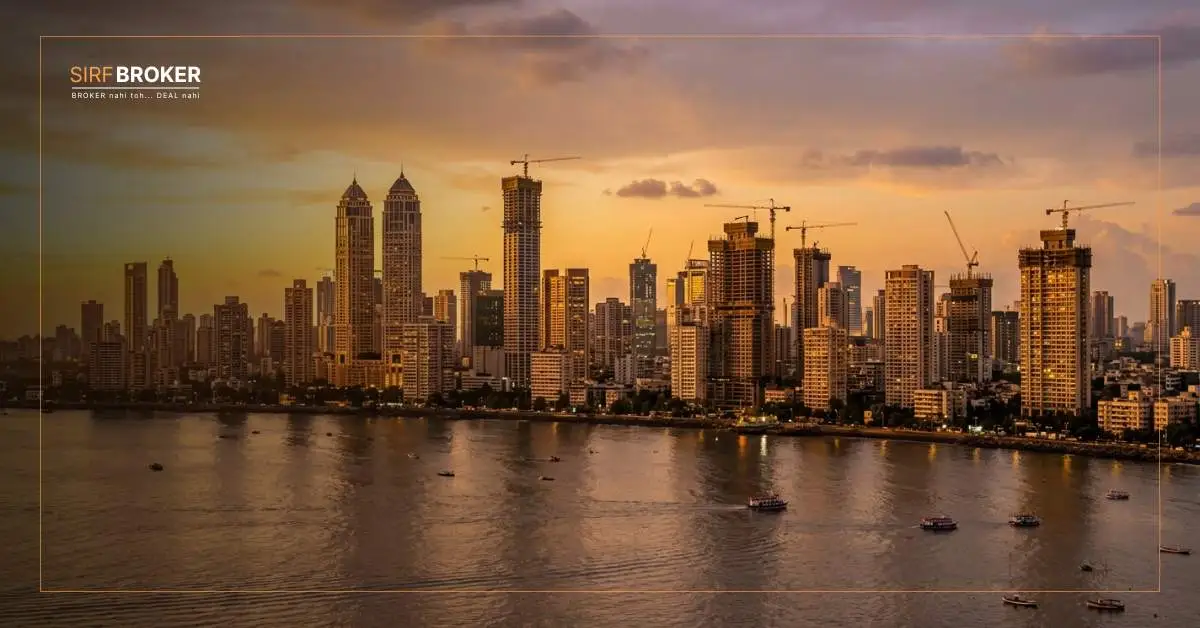
March 2026 was Mumbai’s strongest month for property registrations in 14 years — 15,516 units registered, the highest monthly tally since 2012. That would have been the story on its own. But April 2026 then set its own 14-year record. May 2026 set another. Three consecutive months, each establishing a new 14-year high, per the Mumbai property market H2 2026 outlook analysis by Blox.xyz.
Three consecutive monthly records rules out seasonality, rules out a one-off event, and rules out noise. It is a data pattern that means something structural is happening in Mumbai’s residential transaction market — and buyers and brokers heading into the second half of 2026 need to understand what it is.
| Mumbai registered 15,516 homes in March 2026 — highest in 14 years. April set its own 14-year record. May did the same. Three consecutive months of record activity is not a seasonal spike. It is a structural confirmation that Mumbai’s residential market has repriced — and buyers who are waiting for a correction are waiting for something the data does not support. |
What Is Driving Three Consecutive Record Months
| — FOUR STRUCTURAL DRIVERS BEHIND MUMBAI’S REGISTRATION SURGE RBI easing cycle → The RBI cut the repo rate to 5.25% in 2026. Home loan EMIs at 8.25–8.75% are meaningfully lower than the 9.5–10% range of 2023–24. For a ₹1 crore loan, that is a ₹8,000–10,000 monthly EMI reduction. At Mumbai ticket sizes, this is a material affordability improvement that is directly driving purchase decisions. Supply arrival → Mumbai new launches surged 111% YoY in Q2 2026 per PropEquity. Registration volumes follow supply — more available product means more completable transactions. Buyers who were waiting for choice now have it. Premium demand crystallising → Mumbai’s financial sector wealth, NRI participation, and UHNWI buyer cohort all crystallised purchase decisions in Q1 2026. The premium segment above ₹1 crore drove the majority of registration volume — these are buyers who have been evaluated, pre-approved, and were waiting for the rate and supply signal to act. Fear of further price increase → Mumbai residential prices rose in the 12–15% YoY range in key micro-markets in Q1 2026. Buyers who waited through 2024 watching prices rise have recalibrated — waiting is not a neutral position when prices appreciate annually at that rate. |
Mumbai Micro-Market Breakdown — Where the Activity Is
| Micro-Market | 2026 Activity | Buyer Profile | Broker Note |
|---|---|---|---|
| South Mumbai / BKC | UHNWI and luxury segment. Limited new supply. Strong appreciation. | UHNWI, financial sector, NRI | Trophy transactions. Long closing timelines. High documentation requirement. |
| Powai / Vikhroli | Strong mid-premium demand. Tech and BFSI employee buyer base. Hiranandani and Godrej supply active. | Mid-premium, tech sector, GCC professionals | ₹1.5–3.5 crore range. Fast-moving. Multiple offers on quality product. |
| Navi Mumbai | Supply +116% YoY Q2 2026. Metro connectivity improving. Best value-per-sq-ft in MMR. | Mid-budget, first home, infrastructure bet | Most inventory choice in MMR right now. Buyer negotiation possible on payment plans. |
| Thane / Kalyan | Highest volume micro-market by registration count. Affordable-to-mid range. Infrastructure improving. | Mid-budget, end-user, first home | Largest buyer universe. Most competitive broker environment. Speed of transaction is paramount. |
| Western Suburbs (Andheri–Goregaon) | Premium supply from national developers active. Airport proximity premium holding. | Mid-premium, entertainment/media, NRI | ₹2–5 crore range. Strong demand-supply balance. Resale market also very active. |
What H2 2026 Looks Like for Mumbai Buyers
| Three consecutive monthly records going into H2 means the market enters July–December from a position of strong momentum, not from a position of recovery. Buyers hoping for price correction in H2 2026 are working against a data set that shows no structural basis for one: RBI rates are not expected to rise, supply is being absorbed, and premium demand has a documented income base. The H2 risk for buyers is missing product — not overpaying for it. |
For buyers transacting in Mumbai’s fast-moving market, understanding all pre-purchase costs is essential. The guide on circle rates and how they affect property transaction costs is especially relevant in Mumbai where stamp duty and registration costs are significant at current ticket sizes.
What H2 2026 Looks Like for Mumbai Brokers
Record registration volumes create a high-activity environment — but also a more competitive one. The brokers who will outperform in H2 2026 Mumbai are those who have moved beyond listings to genuine micro-market advisory: who knows which Navi Mumbai projects have the strongest developer track records, which Western Suburbs buildings are closest to RERA OC, which Powai resale properties have the cleanest title. Product knowledge at that depth is what converts a registration-record market into a commission-record year.
For brokers building the market intelligence depth that converts active markets into sustained pipeline, the guide on building a personal brand through market intelligence covers the frameworks that create long-term competitive advantage.
Sirf Broker POV
Three consecutive 14-year records in monthly registrations is Mumbai telling you something clearly: the decision to buy has been made by a very large number of people, across income segments, across micro-markets, and across three months that should have shown seasonal variation but didn’t.
The question brokers should be asking is not whether the market is strong — the data answers that. The question is: what does a buyer or seller in this market need from a broker that a listing portal cannot provide? In a market this active, the portal shows the product. The broker wins the transaction by knowing what the portal doesn’t show — title status, developer delivery track record, RERA OC timeline, building quality, micro-market appreciation trajectory. That is the advisory gap that record registration markets create and that good brokers fill.
Conclusion
Mumbai has posted three consecutive 14-year monthly registration records. The structural drivers — rate cuts, supply arrival, premium demand, price appreciation psychology — are not reversing in H2 2026. For buyers, the risk is inventory, not price correction. For brokers, the opportunity is converting a high-volume market into high-value advisory relationships grounded in genuine micro-market knowledge.
Before any Mumbai transaction, understanding the full payment structure matters. The guide on booking amount, token amount, and advance payment clarifies the payment stages that every buyer and broker in a fast-moving market must get right.
Frequently Asked Questions
1. How many properties were registered in Mumbai in March 2026?
15,516 units — the highest monthly registration tally in 14 years, per Blox.xyz’s Mumbai Property Market H2 2026 analysis. April and May 2026 then each set their own 14-year monthly records, confirming the trend is structural rather than seasonal.
2. Why is Mumbai’s property registration at a 14-year high in 2026?
Four converging drivers: RBI repo rate cut to 5.25% reducing EMIs materially; new supply surge (launches +111% YoY in Q2 2026); premium demand from financial sector wealth, NRIs, and UHNWIs crystallising purchase decisions; and price appreciation of 12–15% YoY removing the case for waiting.
3. Which Mumbai micro-market offers the best value for buyers in 2026?
Navi Mumbai — supply +116% YoY, best value-per-sq-ft in MMR, improving metro connectivity, and developer willingness to negotiate payment plans in a supply-heavy environment. Thane/Kalyan for the widest affordable-to-mid range choice. Powai/Vikhroli for mid-premium with strong rental demand from GCC professionals.
4. Will Mumbai property prices fall in H2 2026?
No structural basis supports a price correction in H2 2026. RBI rates are not expected to rise. Supply is being absorbed. Premium demand has a documented income base. Three consecutive monthly records confirm demand is robust. H2 risk for buyers is inventory availability, not overpayment.
5. What is the price range for apartments in Mumbai in 2026?
Ranges vary significantly by micro-market: South Mumbai/BKC ₹5–100+ crore; Western Suburbs ₹2–5 crore; Powai/Vikhroli ₹1.5–3.5 crore; Thane ₹80 lakh–2 crore; Navi Mumbai ₹65 lakh–2 crore. Premium segment above ₹1 crore is the fastest-growing segment by volume.
6. Is 2026 a good time to buy property in Mumbai?
For buyers with financial readiness — yes, for most profiles and micro-markets. Prices are appreciating 12–15% YoY in key micro-markets. EMIs are at their lowest in three years post-rate cuts. Supply has arrived in Navi Mumbai and the western suburbs. Waiting has a documented annual cost of 12–15% price appreciation.
7. What should Mumbai brokers focus on in H2 2026?
Move beyond listings to genuine micro-market advisory: developer delivery track records, RERA OC timelines, title status on resale properties, building quality differentials, and micro-market appreciation trajectories. In a record-volume market, product knowledge depth is what differentiates a broker from a portal.
Sources
- Blox.xyz — Mumbai Property Market H2 2026 Outlook — 15,516 units March 2026 (14-year high), April and May consecutive records. blox.xyz
- PropEquity / Business Standard — June 26, 2026 — Mumbai new launches +111% YoY Q2 2026. business-standard.com
- JLL India — Residential Dynamics Q1 2026 — Premium segment growth, price appreciation data. jll.co.in
| Disclaimer: Published by Sirf Broker for educational purposes only. Not investment or financial advice. Consult a qualified broker before any property transaction. |