

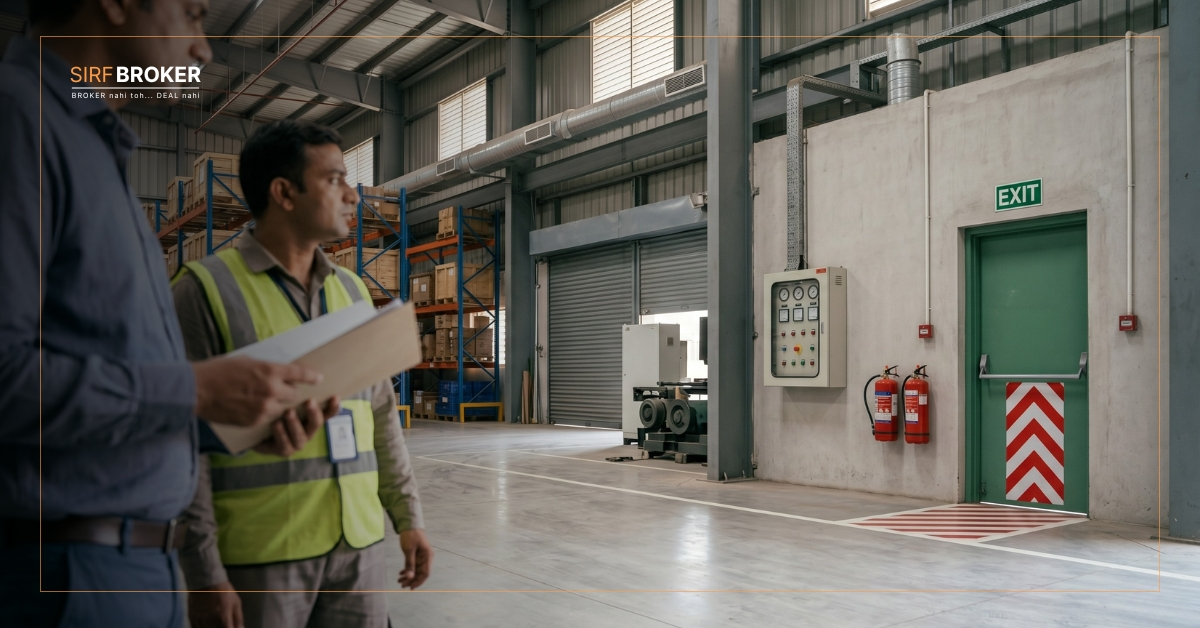
A factory or warehouse can look perfect during a site visit.
The shed is large. The rent looks reasonable. The road access is decent. The loading area seems workable. The owner says, “Sir, sab approval hai.” The broker says, “Industrial use ke liye best property hai.”
But then one question changes everything:
If there is a fire, can people get out safely and can the building control the damage?
This is the question many investors, tenants and even brokers ask too late.
The recent fire at a chemical manufacturing unit in Rewari’s Bawal industrial area brought industrial safety back into public attention. As reported by The Times of India, the incident injured six workers, triggered multiple explosions, required around 35 fire tenders, and led to the evacuation of nearly 300 workers. The exact cause may depend on investigation, but for real estate professionals, the larger lesson is already clear.
| Industrial real estate is not safe just because it is big, cheap or located in an industrial area. It is safe only when the building, use, storage, exits, fire systems, approvals and operations are aligned. |
For Sirf Broker’s audience, this topic is important because many brokers deal with factories, warehouses, industrial sheds, godowns, logistics spaces, cold storage facilities, workshops and commercial buildings.
If brokers want to become serious advisors, they cannot sell industrial property only on rent, area and location.
They must also understand safety risk.
The Real Question Is Not “Kitna Rent Hai?”
Most industrial property conversations start with the usual questions:
- What is the area?
- What is the rent per sq ft?
- Is it on the main road?
- Can trucks enter?
- What is the power load?
- Is it near highway or industrial belt?
These questions matter. But they are incomplete.
Industrial property carries operational risk. A mistake in a home may cause inconvenience. A mistake in a factory or warehouse can risk lives, inventory, machinery, business continuity, insurance claims, legal liability and long-term property value.
So the better question is:
Can this property safely support the business that wants to operate from it?
| In industrial real estate, wrong use in the wrong building is not just a leasing mistake. It can become a safety, legal and financial disaster. |
Why Industrial Fire Safety Is a Real Estate Issue
Many people think fire safety is only the tenant’s responsibility.
That is a weak assumption.
Fire safety is linked to the property itself: its structure, occupancy use, access, exits, electrical load, ventilation, storage design, fire systems, approach road, water availability and compliance status.
The National Building Code of India, especially Part 4 on Fire and Life Safety, lays down fire safety principles for buildings, including fire prevention, life safety, occupancy classification, fire zones, construction type and measures to reduce danger to life from fire, smoke, fumes or panic.
That means fire safety is not an optional decoration. It is part of building suitability.
For brokers, this means one thing clearly:
A property cannot be called suitable for industrial use unless its safety and compliance match the intended business use.
The Industrial Safety Fit Formula
| Industrial Safety Fit = Fire NOC + Approved Use + Exit Safety + Electrical Load + Storage Risk + Fire Systems + Emergency Access A factory or warehouse is suitable only when the property risk matches the business operation, stored material and safety infrastructure. |
This formula is not a legal certificate. It is a practical broker and investor thinking tool.
If any of these elements are weak, the property needs deeper due diligence before leasing or buying.
Fire NOC Is Not a Formality
Many landlords and tenants treat Fire NOC as a paperwork item.
That is dangerous thinking.
A Fire NOC generally indicates that the building has been reviewed by the relevant fire department for required fire prevention and protection systems, subject to applicable local laws and building category. The requirement depends on the building type, use, size, height, occupancy and state-specific rules.
For industrial and warehouse properties, Fire NOC becomes especially important because these spaces may involve:
- Flammable material storage
- Heavy electrical load
- Packaging material
- Diesel generators
- Chemical use
- Machinery heat
- Battery charging areas
- Large worker presence
- Dense inventory stacking
Times of India earlier reported a New Delhi fire department analysis where many fire incidents occurred in buildings that lacked valid Fire NOCs, including mercantile, industrial and business properties. That is exactly why brokers cannot casually ignore this document.
| A Fire NOC is not just a document. It is a signal that the property has been checked against fire safety requirements. But even after NOC, maintenance and actual on-ground compliance must be verified. |
The Broker’s Industrial Fire Safety Checklist
This is where brokers can create real value.
Before recommending a factory, warehouse or industrial shed, brokers should guide the buyer or tenant through basic safety questions. Brokers are not fire consultants, but they can identify red flags and recommend professional verification.
| Safety Check | Why It Matters | What Broker Should Ask |
|---|---|---|
| Fire NOC | Shows basic fire department approval where applicable. | Is the Fire NOC valid, current and applicable to this use? |
| Approved land use | Wrong use can create legal and insurance issues. | Is this property approved for factory, warehouse, storage or hazardous use? |
| Emergency exits | People need safe evacuation routes. | Are exits clearly available, accessible and not blocked by stock? |
| Electrical load | Overloaded systems are a major fire risk. | Does sanctioned load match actual machinery or warehouse operation? |
| Material stored | Fire risk changes with chemicals, packaging, fabrics, plastics or batteries. | What goods will be stored or manufactured here? |
| Fire systems | Equipment must work during emergency. | Are extinguishers, sprinklers, hydrants, alarms and pumps installed and maintained? |
| Fire tender access | Emergency vehicles need entry and movement space. | Can fire tenders approach the building easily? |
| Ventilation | Smoke, heat and fumes need safe management. | Is ventilation suitable for the activity and stored material? |
Why Warehouse Fire Risk Is Different From Normal Commercial Risk
A warehouse may look simple: four walls, roof, floor and loading gate.
But warehouse fire risk can be serious because inventory is often densely stored. Packaging materials, cardboard, plastic, fabric, chemicals, oils, batteries and electrical equipment can increase fire load.
The risk becomes worse when:
- Goods are stacked too high.
- Emergency exits are blocked.
- Electrical wiring is temporary or overloaded.
- Fire extinguishers are expired or missing.
- Sprinklers are absent or not maintained.
- Workers are not trained.
- Battery charging is done casually.
- Flammable goods are stored without segregation.
- There is poor ventilation.
- Fire tender access is blocked by parked trucks or stock.
| A warehouse is not risky because it stores goods. It becomes risky when storage design, fire systems, electrical load and emergency access are ignored. |
Factory Space: Match the Building With the Business Use
Every factory is not the same.
A light assembly unit, food processing unit, garment unit, chemical unit, printing unit, packaging unit and battery-related operation have very different safety requirements.
This is why brokers must stop using one generic label: “industrial space.”
The better question is:
What will the tenant actually do inside the property?
| Business Use | Possible Fire/Safety Concern | Due Diligence Focus |
|---|---|---|
| Chemical unit | Flammable material, fumes, explosion risk. | Hazard classification, ventilation, storage segregation, approvals. |
| Garment/textile unit | Fabric storage, lint, electrical machines. | Fire load, exits, wiring, extinguisher coverage, worker evacuation. |
| Packaging warehouse | Cardboard, plastic, dense stacking. | Stacking height, sprinkler need, aisle width, exit clearance. |
| Cold storage | Electrical load, insulation material, refrigeration systems. | Electrical safety, emergency exits, ventilation, equipment maintenance. |
| Battery/EV component storage | Battery fire, charging risk, thermal events. | Segregated storage, fire suppression, charging protocol, ventilation. |
| Light assembly | Electrical load and worker safety. | Load sanction, exits, work area spacing, emergency systems. |
Broker POV: Stop Saying “Factory Ke Liye Perfect Hai” Without Checking Use
This is where commercial brokers need to become sharper.
A factory or warehouse is not perfect unless it fits the tenant’s operation.
A broker who understands this will build more trust with industrial clients.
| Don’t say: “Sir factory ke liye perfect hai, rent bhi reasonable hai.” Say instead: “Sir, pehle business use samajhte hain. Agar chemicals, packaging, batteries ya high electrical load ka kaam hai, toh Fire NOC, exits, ventilation, sanctioned load, storage safety aur fire tender access verify karna zaroori hai.” |
This is the difference between a broker who forwards listings and a broker who protects the client from operational risk.
Investor POV: Cheap Industrial Property Can Be Expensive Later
Industrial investors often chase three things:
- Low price
- High rent promise
- Industrial location tag
That is not enough.
A cheap industrial property can become expensive if it lacks compliance, access or safety readiness. Tenants may reject it. Banks may be cautious. Insurers may raise issues. Authorities may object. Repairs may cost more than expected.
Before buying, investors should check:
- Is the land use approved for intended industrial activity?
- Is Fire NOC available and valid where required?
- Can the property attract serious tenants?
- Can trucks and emergency vehicles access the site?
- Is the power load suitable?
- Are fire exits and evacuation routes practical?
- Will the property need major retrofitting?
- Can the asset meet insurer or corporate tenant requirements?
| In industrial real estate, the cheapest shed is not always the best deal. The best asset is the one that serious tenants can use legally, safely and continuously. |
Tenant POV: Do Not Lease First and Fix Safety Later
Many businesses lease a property first and then try to adjust operations inside it.
That approach can become risky.
Before signing a lease, tenants should check whether the property supports their actual operation.
Tenants should verify:
- Approved use of the property
- Fire NOC status
- Storage permissions
- Electrical load and wiring condition
- Ventilation and heat management
- Emergency exits
- Firefighting systems
- Fire tender access
- Insurance compatibility
- Lease clauses related to compliance responsibility
Safety retrofitting after possession can be costly. It may also delay operations.
So the better approach is simple:
Check safety before signing, not after shifting.
The Fire Safety Red Flags Brokers Should Not Ignore
Some red flags are visible even before technical inspection.
Brokers should learn to notice them.
Major red flags include:
- Owner says “NOC ho jayega” but cannot show current documents.
- Emergency exits are blocked by storage or machinery.
- Electrical wiring looks temporary or overloaded.
- Fire extinguishers are missing, expired or inaccessible.
- No visible hydrant, sprinkler or fire alarm system where required.
- Approach road is too narrow for emergency vehicles.
- Building use does not match tenant’s business activity.
- Chemicals, packaging or flammable materials are stored casually.
- There is no clear evacuation path for workers.
- Owner avoids written confirmation of compliance.
| If safety documents are unclear before the deal, they will not magically become clear after the advance payment. |
What Documents Should Be Checked?
Documentation depends on state, city, building type and business use. Still, brokers and investors should usually ask for relevant documents before moving ahead.
| Document / Check | Why It Matters | Who Should Verify |
|---|---|---|
| Fire NOC | Basic fire safety approval where applicable. | Fire consultant / legal advisor / tenant team. |
| Land use approval | Confirms permitted use of property. | Legal advisor / authority records. |
| Building plan approval | Shows approved construction layout. | Architect / legal advisor. |
| Occupancy / completion certificate | Important for completed buildings where applicable. | Legal advisor / local authority. |
| Electrical load sanction | Shows whether power supply matches operation. | Electrical consultant / tenant technical team. |
| Pollution / industry-specific approvals | Needed for certain manufacturing or storage activities. | Compliance consultant / legal advisor. |
| Insurance compatibility | Insurers may require safety and compliance conditions. | Insurance advisor / tenant finance team. |
Broker Advisory Script: How to Sound Professional
Here is how brokers should frame industrial property safety during client conversations.
| Better Broker Line: “Sir, industrial property mein sirf rent aur area nahi dekhte. Fire NOC, approved use, electrical load, exits, storage type, fire tender access aur insurance suitability bhi check karna hota hai. Main property shortlist karwa sakta hoon, but finalisation se pehle fire/safety consultant aur legal verification zaroor karni chahiye.” |
This line builds trust.
It tells the client that the broker is not hiding risk. The broker is helping the client make a safer business decision.
Final Sirf Broker View
Industrial fire safety is not a side topic.
It is central to factory, warehouse and industrial real estate decisions.
The Rewari factory fire is a reminder that industrial properties are not judged only by location, rent and size. They must be judged by whether they can safely support the business inside them.
| The future industrial broker will not only know where warehouses are available. They will understand compliance, fire safety, storage risk, tenant operations and due diligence. |
For investors, this means checking safety before chasing rental yield.
For tenants, this means verifying compliance before signing a lease.
For landlords, this means maintaining fire systems, exits and approvals properly.
For brokers, this means one thing clearly:
Do not sell industrial property as space. Sell it as a safe and suitable operating environment.
Frequently Asked Questions (FAQs)
1. Why is fire safety important in industrial real estate?
Fire safety is important because factories and warehouses often involve machinery, electrical load, workers, stored goods, packaging material, chemicals or other fire risks. Poor safety can lead to loss of life, property damage, legal issues and business disruption.
2. Is Fire NOC mandatory for every warehouse or factory in India?
Fire NOC requirements depend on state laws, local fire department rules, building type, size, height, occupancy and use. Buyers and tenants should verify the requirements with local authorities or a qualified fire safety consultant.
3. Can a broker verify fire safety alone?
No. A broker can identify basic red flags and ask the right questions, but final verification should be done by qualified fire consultants, legal advisors, architects, engineers and relevant authorities.
4. What should investors check before buying industrial property?
Investors should check land use, Fire NOC status, building approvals, emergency exits, electrical load, fire systems, truck and fire tender access, tenant suitability, insurance compatibility and compliance history.
5. Why is warehouse fire risk different from normal shop or office risk?
Warehouses often store goods in bulk. Packaging, plastic, fabric, chemicals, batteries or dense stacking can increase fire load. Poor aisle space, blocked exits and weak fire systems can make risk worse.
6. What is a major red flag in industrial property leasing?
A major red flag is when the owner says approvals or Fire NOC will be arranged later, but cannot show current documents. Another red flag is when emergency exits or fire equipment are missing, blocked or poorly maintained.
7. How can brokers become better industrial property advisors?
Brokers should understand business use, storage type, compliance needs, Fire NOC basics, electrical load, exits, truck access, fire tender movement and insurance-related concerns. This helps them guide clients beyond rent and area.
Sources and References
- Times of India: Report on Rewari Bawal chemical factory fire, worker injuries, fire tenders deployed and evacuation details.
- National Building Code of India 2016, Part 4: Fire and Life Safety provisions covering building classification, fire zones, construction type, fire prevention and life safety requirements.
- Ministry of Housing and Urban Affairs: Fire protection and fire safety requirements for buildings.
- Delhi Fire Department / Times of India: Reporting on fire incidents and lack of valid Fire NOCs in several building categories.
- State Fire Service Acts and Local Fire Departments: Fire NOC and fire safety compliance requirements vary by state, city, building type and occupancy.
- Factories Act, 1948: Worker safety and factory operation compliance framework.
- CBRE, JLL, Colliers, Anarock and Cushman & Wakefield: Industrial, warehousing and logistics real estate trend references.
Disclaimer
This blog is published by Sirf Broker for educational and informational purposes only. It is not legal advice, fire safety advice, engineering advice, insurance advice or a property buying, selling or leasing recommendation. Fire NOC rules, industrial approvals, warehouse safety norms and compliance requirements vary by state, city, building type, occupancy and business use. Readers should consult qualified fire safety consultants, legal advisors, architects, engineers, insurance professionals and relevant authorities before making any industrial real estate decision.