

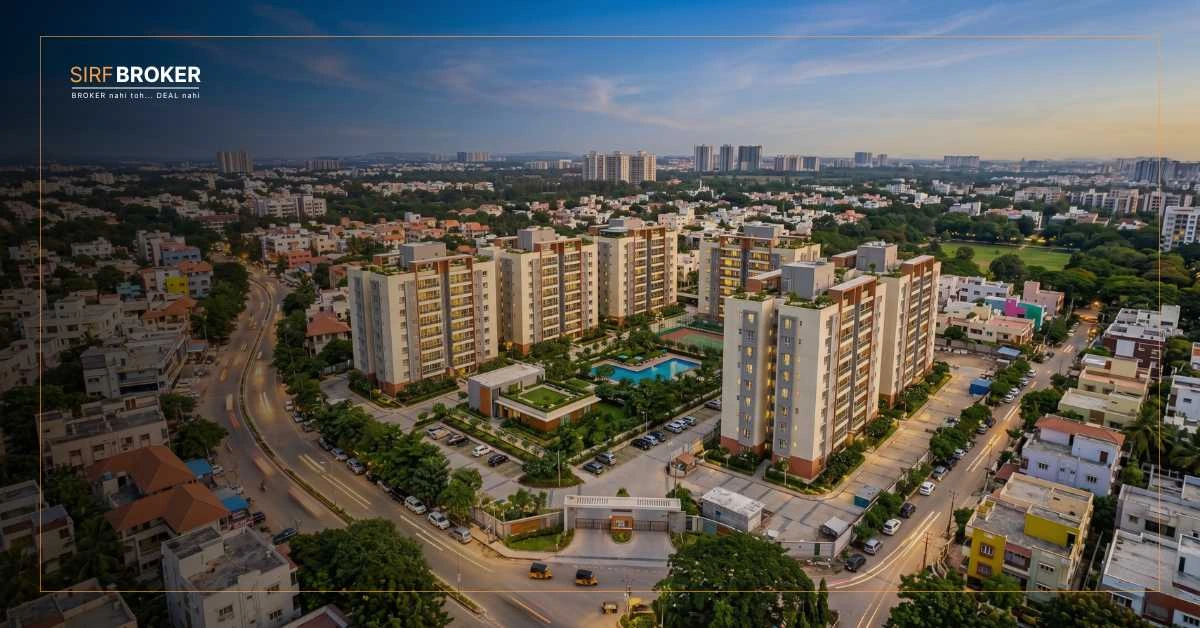
The segment of buyers that brokers speak to most — the first-time homebuyer, the young professional, the family upgrading from rental to owned — is looking for homes priced below Rs 75 lakh. In most major Indian cities today, that buyer is running out of new options.
This is not a temporary supply hiccup. It is a structural withdrawal by developers from the segment where demand is highest but margins are most constrained. And it has consequences for brokers that go beyond a difficult sales conversation.
What the Launch Data Actually Shows
Homes priced below Rs 40 lakh accounted for just 10% of new residential launches in Q1 2026, according to Knight Frank India — down from 26% in 2021. In five years, developers have effectively halved their commitment to the segment that represents the largest addressable buyer population in India.
Meanwhile, the Rs 1.5 crore to Rs 3 crore range has emerged as the dominant launch category, driven by developer economics: higher ticket sizes absorb construction cost inflation better, attract buyers who qualify for larger loans, and generate more revenue per unit on the same land parcel.
Knight Frank India estimates the urban affordable housing deficit at 9.4 million units currently, projected to widen to nearly 30 million units by 2030 if current launch trends persist. India’s urban population is growing. The housing they can afford is not being built.
Why Developers Have Walked Away from Affordable Housing
The economics of affordable housing in India have deteriorated sharply since 2020. Construction costs — driven by steel, cement, and labour inflation — have risen 25–35% over the past four years. Land costs in and around major cities have not corrected; they have appreciated.
A developer building homes in the Rs 30–50 lakh range on urban or peri-urban land in Delhi NCR, Mumbai, or Bengaluru is working on margins that leave almost no buffer for cost overruns, delays, or slower sales. The same developer building in the Rs 1.5 crore range has better margins, faster sell-through on each unit, and buyers who qualify more reliably for bank financing.
PMAY-Urban — the government’s primary subsidy programme for affordable homebuyers — has helped, but not enough. The subsidy is capped, the income eligibility criteria have not been updated for inflation, and the programme does not address the fundamental supply-side withdrawal. For a detailed breakdown of what PMAY-Urban 2.0 actually offers buyers, read PMAY-Urban 2.0: What Real Estate Brokers Must Explain Before Promising a Subsidy.
The Rs 55,000 Crore Stuck Project Problem
The affordable housing shortage is compounded by a pipeline of stalled projects that have already been sold but not delivered. According to Business Standard’s May 2026 analysis, over 450,000 affordable and mid-range homes across more than 1,500 stuck projects require approximately Rs 55,000 crore in funding support to be completed.
These are homes that buyers have already paid booking amounts and instalments on. They are not available as resale inventory because they have not been delivered. They are not available as new supply because the projects are stalled. They represent a segment of demand locked into a waiting position — buyers who cannot afford to exit their existing commitment and buy elsewhere.
For brokers, this creates a specific advisory challenge: a buyer who has already invested in a stuck project needs guidance on the RERA complaint process, the NCLT insolvency route, and the rare cases where state government intervention has rescued stuck projects.
What the Disappearing Affordable Segment Means for Brokers in Practice
The immediate practical impact on brokers is a shrinking inventory to show buyers in the sub-Rs 75 lakh range in most metros. The realistic alternatives are:
Resale inventory — older apartments in established localities priced within budget. Brokers who build resale expertise in their micromarket will have inventory that new project specialists don’t. This is one of the underused advantages of the resale market in a period of new launch price inflation.
Peripheral and Tier-2 city options — developers who have withdrawn from affordable urban launches are still building in peri-urban locations and Tier-2 cities where land cost allows viable economics. The buyer who cannot afford Rs 50 lakh in Gurugram may be able to afford Rs 40 lakh in Bhiwadi or Faridabad with comparable infrastructure access.
Pre-launch and early-stage projects — occasionally, developers launch the first tower of a larger project at below-market pricing to establish sales velocity. Brokers with developer relationships can offer clients access to these early windows before prices normalise.
Understanding what the buyer’s actual budget allows — including the difference between the booking amount, the home loan eligibility, and the total cost of ownership — is the foundation of this advisory role. Read Difference Between Booking Amount, Advance Payment, and Token Amount for a clear breakdown to share with first-time buyers.
Sirf Broker POV
The narrative around India’s housing market in 2026 is overwhelmingly bullish — record sales, record collections, new launches at every industry event. That narrative is accurate for the Rs 1 crore-plus segment. It is not accurate for the buyer that the majority of Indian brokers work with daily.
The broker who serves first-time buyers and young families in Delhi NCR, Mumbai, or Bengaluru is operating in a market where the product their client needs is being systematically defunded by developer economics. That is not a market failure that will self-correct quickly — it requires policy intervention that is not currently arriving at scale.
What this means for brokers is uncomfortable but important: manage buyer expectations actively. The buyer who comes to you expecting a new 2BHK within 30 minutes of their office in Bengaluru for Rs 45 lakh needs to understand that this product does not exist in the new launch market anymore. The role of the broker is not to pretend otherwise — it is to help the buyer understand their realistic options, including resale, peripheral locations, and timeline adjustment.
Brokers who do this work honestly will retain clients who respect their expertise. Brokers who chase buyers around unavailable inventory will lose them to the next person who tells them a different story. The market has changed. The advice has to change with it.
Conclusion
India’s affordable housing segment is in structural retreat — not cyclical decline. The data from Knight Frank India is unambiguous: 10% of launches below Rs 40 lakh today versus 26% in 2021, against a 9.4 million unit deficit that is widening. For brokers, this is an inventory reality to navigate, not a problem to wait out.
For a clear explanation of what buyers need to understand before signing anything, read What Is Circle Rate and Why Does It Matter in Property Deals?
Frequently Asked Questions
Why is affordable housing disappearing from new project launches in India?
Developer economics have made affordable housing financially difficult to build. Construction costs have risen 25–35% since 2020, land costs have not corrected, and the margin on homes below Rs 40 lakh is too thin to absorb cost overruns or slower sales. Developers have migrated to higher ticket sizes where margins are better.
What is the affordable housing deficit in India in 2026?
Knight Frank India estimates the urban affordable housing deficit at 9.4 million units currently, projected to widen to nearly 30 million units by 2030. Homes below Rs 40 lakh represented just 10% of new launches in Q1 2026, down from 26% in 2021.
What options do first-time homebuyers have if new affordable homes are not available?
Buyers in the affordable segment have three realistic paths: resale inventory in established localities, peripheral or Tier-2 city projects where land costs allow viable pricing, and early-stage or pre-launch windows in larger projects where developers offer initial pricing discounts.
What is PMAY-Urban and does it help affordable homebuyers in 2026?
PMAY-Urban provides credit-linked interest subsidies to eligible homebuyers in specified income brackets. While it reduces the effective interest burden, it does not address the supply-side withdrawal from the affordable segment. The subsidy is capped and income eligibility criteria have not been updated for inflation.
What is the stuck project problem in India’s affordable housing market?
Over 450,000 affordable and mid-range homes across more than 1,500 stalled projects require approximately Rs 55,000 crore in funding support, according to Business Standard’s May 2026 analysis. Buyers in these projects have paid booking amounts but have not received their homes.
How should brokers advise clients who cannot find affordable homes in their preferred city?
Brokers should set honest expectations about new launch availability in the sub-Rs 75 lakh bracket in major metros, then present realistic alternatives: resale apartments in the client’s preferred locality, comparable options in peripheral markets with good connectivity, or a timeline adjustment to allow for additional savings.