

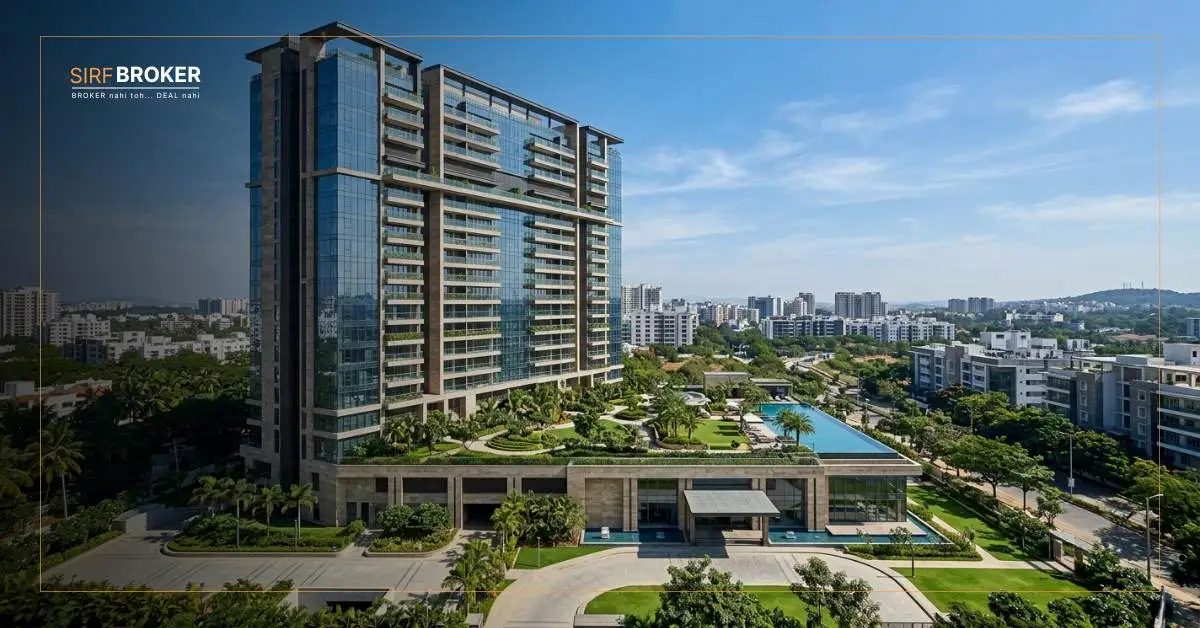
Bengaluru’s residential market hit a launch volume that would have looked like a headline in any other city. 21,670 new units in Q2 2026 — a 41% jump year-on-year. BusinessToday reported in July 2026 that Bengaluru emerged as India’s strongest housing market in Q2, with Mumbai dominating sales and NCR leading price growth. Those are impressive statistics.
The one figure that changes the reading of all of them: 96% of Bengaluru’s new launches in Q2 2026 were in the premium and luxury segment — homes priced above ₹80 lakh — according to data compiled by Business Standard in June 2026. The city that built its real estate identity on serving the aspiring tech professional — the ₹50-70 lakh 2BHK buyer — has effectively stopped producing new inventory for that buyer.
This is not exclusively a Bengaluru phenomenon, but Bengaluru is where the premium concentration is most extreme. Understanding what’s happening here and why gives any broker or developer operating in India’s residential market a sharper read on where the industry is going.
| 21,670 new homes launched in Bengaluru in Q2 2026. Up 41% year-on-year. 96% priced above ₹80 lakh. The city is building at record pace — for a buyer that represents roughly the top 15% of its urban workforce. |
The Q2 2026 Launch Data Across India’s Top Markets
Bengaluru’s 41% year-on-year launch surge is the most dramatic number, but the pattern holds across India’s top residential markets.
Mumbai Metropolitan Region added approximately 34,555 new residential units in Q2 2026, a 23% year-on-year increase, according to data tracked by ANAROCK Research. Delhi NCR saw a different concentration: more than 61% of new launches were in the luxury segment priced above ₹1.5 crore. Across all markets combined, new housing launches rose 7% year-on-year to approximately 1.06 lakh units in Q2 2026.
| City | Q2 2026 New Launches | YoY Change | Premium Concentration |
|---|---|---|---|
| Bengaluru | ~21,670 units | +41% | 96% above ₹80 lakh |
| Mumbai MMR | ~34,555 units | +23% | Majority above ₹1 crore |
| Delhi NCR | Not separately disclosed | — | 61% above ₹1.5 crore |
| All India Top Cities | ~1.06 lakh units | +7% | 94% above ₹45 lakh |
Source: ANAROCK Research; Business Standard, June 2026; BusinessToday, July 2026; Knight Frank India Q1 2026.
Knight Frank India’s Q1 2026 India Real Estate Report set a quarterly record for residential launches — 90,023 new units in Q1, up 13% year-on-year — and noted that Bengaluru, Chennai, Delhi NCR, and Kolkata led price appreciation at above 12% year-on-year. The price appreciation is real. The question is whether it reflects genuine value creation or a supply composition that has narrowed to serve only high-purchasing-power buyers.
Why Bengaluru Became the Premium Capital of Indian Residential Real Estate
The premium concentration in Bengaluru is not accidental. Three structural forces have converged to create it.
First, Bengaluru’s employment base has shifted upmarket faster than any other Indian city. The GCC expansion — Global Capability Centres now employing a significant share of Bengaluru’s tech workforce in senior engineering, data science, and AI roles — has pulled average compensation in the city’s primary homebuying cohort (25-38 year-old tech professionals) well above what it was five years ago. A software professional at a GCC in Whitefield earning ₹25-35 lakh per year is a plausible buyer of a ₹1.2 crore 2BHK. That demand pool did not exist at this scale in 2019.
Second, land costs in Bengaluru’s established tech corridors — Whitefield, Electronic City, Sarjapur Road, Hebbal — have risen sharply. According to JLL’s Q1 2026 India Residential Report, Bengaluru and Chennai led housing price appreciation at above 12% year-on-year. Developers building on land acquired at 2022-2024 prices cannot deliver at below ₹80 lakh without margin compression that makes the project commercially unviable.
Third, developer appetite for affordable projects has structurally declined. With institutional capital, NBFC financing, and PE backing concentrating around premium residential assets, developers who need external capital have no choice but to build what their capital partners will finance. The result is a market where the sub-₹50 lakh buyer in Bengaluru’s primary corridors has no new inventory. Their options are the resale market, peripheral micro-markets, or the rental market.
What the Sales Data Shows Alongside the Launch Data
The launch story is incomplete without the corresponding sales picture. Here it gets more complicated.
Residential sales in Q1 2026 across India’s top 7 cities rose 8% year-on-year to 70,631 units, per JLL’s Q1 2026 Residential Dynamics Report — a healthy recovery from the 12% year-on-year decline in Q1 2025. Premium homes priced above ₹10 million (₹1 crore) saw a 30% year-on-year sales increase in Q1 2026. The premium segment is both launching and selling.
| However, Business Standard reported in June 2026 that overall housing sales fell 6% across major cities in April-June 2026, even as launches rose. Rising supply, falling aggregate sales — the market is not uniformly absorbing what developers are building. Premium segment absorption remains strong; mid-segment and affordable offtake is softer. |
A 41% launch increase in Bengaluru against a backdrop of declining national aggregate sales means inventory is building. Bengaluru’s premium segment has depth of demand — but it is not unlimited. Brokers should watch the months-of-inventory figure in premium Bengaluru corridors through Q3 2026.
What the NCR Data Adds to the Picture
Delhi NCR tells the premium housing story differently from Bengaluru, and the difference matters for brokers operating in that market.
In NCR, the luxury concentration is at the very top — above ₹1.5 crore, where 61% of new launches are concentrated. In Bengaluru, the premium concentration is broader, from ₹80 lakh upward. This means the NCR market has a steeper price cliff: the difference between what new supply offers and what the mid-income buyer can afford is more pronounced than in any other market.
NCR also led India in residential price growth in Q2 2026 per BusinessToday. That price growth is driven by three forces: infrastructure development (metro expansions, expressway connectivity), GCC and MNC corporate demand in Gurugram and Noida, and constrained resale supply in established sectors. Brokers in NCR operating in the resale segment — knowing which sectors of Gurugram or Noida offer value in the ₹50-80 lakh range — hold the advisory advantage. That knowledge is becoming scarce and therefore valuable.
For brokers handling resale transactions in NCR, understanding what the circle rate means for stamp duty calculations in resale deals is foundational knowledge that clients now expect.
Sirf Broker POV
The premium housing market is not a bubble. It is a structurally valid response to a segment of Indian households — tech professionals, GCC employees, senior corporate professionals — whose income growth has decisively outpaced what housing supply was previously designed for. When a software principal at a GCC earns ₹30 lakh a year, a ₹1.2 crore home is a 4x income multiple. That’s not stretched. That’s normal by the standards of most developed housing markets.
The problem is the gap below. When premium is the only segment actively building, the housing market becomes self-selecting — it serves the top 15% of urban income earners and completely fails the next 40%. In Bengaluru, that failure is cascading into rental market inflation. 2BHK rents in Koramangala, HSR Layout, and Whitefield have risen 15-20% year-on-year because buyers who can’t afford premium ownership have no choice but to rent. The ownership market and the rental market are now connected at the hip in a way they weren’t five years ago.
For brokers, the practical implication is this: the client who walks in looking for a ₹60 lakh 2BHK in Bengaluru’s established tech corridors doesn’t have a new-launch option. You can offer them resale — with the RERA compliance, OC verification, and due diligence that entails — or you can guide them toward peripheral corridors (Hosur Road, Anekal, Devanahalli) where land costs and launch prices are lower. The brokers who can credibly advise across both — resale within the city and new launches at the periphery — are the brokers who don’t lose that client to a portal. The brokers who say “let me check” and come back empty-handed lose them permanently.
Conclusion
Bengaluru’s Q2 2026 launch data is impressive in volume and extreme in composition. A 41% jump in launches is strong supply growth; 96% premium concentration is a structural market shift that every broker and developer in the city needs to build their strategy around now. The demand for premium housing is real, the GCC employment base supporting it is durable, and the gap where affordable housing used to be is where the next wave of advisory need — and rental inflation — is building.
For the full picture on what’s happening to home prices across India and whether now is the right time to buy, read: India House Prices 2026: Buy or Wait?
Frequently Asked Questions
1. How many new homes were launched in Bengaluru in Q2 2026?
Bengaluru witnessed approximately 21,670 new residential units launched in Q2 2026, a 41% year-on-year increase, making it India’s strongest housing market by launch momentum in the quarter, according to BusinessToday’s July 2026 reporting and ANAROCK Research data.
2. What percentage of Bengaluru’s new housing launches in 2026 are affordable?
Only approximately 4% of new launches in Bengaluru in Q2 2026 were outside the premium and luxury segment. Approximately 96% of new supply was priced above ₹80 lakh, reflecting the complete structural shift of developer focus toward premium residential in India’s primary GCC-driven tech corridor cities.
3. Why are home prices rising so fast in Bengaluru in 2026?
Bengaluru’s price appreciation — above 12% year-on-year in Q1 2026 per Knight Frank India data — is driven by surging GCC employment pulling up buyer income levels, rising land costs in established tech corridors, and constrained affordable supply pushing remaining demand into the premium product that developers are actually building.
4. What is happening to residential sales across India in Q2 2026?
The picture is mixed. JLL’s Q1 2026 data showed residential sales up 8% year-on-year to 70,631 units, with premium homes above ₹1 crore up 30% YoY. However, Business Standard reported in June 2026 that Q2 2026 aggregate sales fell 6% even as launches rose — indicating premium absorption remains strong while mid-segment demand is softer.
5. Which Indian cities are leading residential price growth in 2026?
Delhi NCR led India in residential price growth in Q2 2026 per BusinessToday. Bengaluru, Chennai, NCR, and Kolkata all showed above 12% year-on-year price appreciation in Q1 2026 per Knight Frank India. Bengaluru’s GCC-driven employment base and supply constraints in established corridors are the structural drivers of its price momentum.
6. What can affordable housing buyers actually do in Bengaluru in 2026?
Buyers seeking homes below ₹60 lakh in Bengaluru have three realistic options: the resale market within established corridors (requiring thorough RERA and OC due diligence), peripheral micro-markets like Hosur Road, Anekal, or Devanahalli where new launches at more accessible price points exist, or the rental market while waiting for the price cycle to moderate. There is virtually no new affordable supply in Bengaluru’s established tech corridors.
Sources and References
- ANAROCK Research — Q2 2026 — New launches ~1.06 lakh units nationally +7% YoY; Bengaluru launches ~21,670 units +41% YoY; Mumbai MMR ~34,555 units +23% YoY. anarock.com
- Business Standard — June 2026 — Bengaluru 96% premium launches; housing sales fall 6% Q2; builders pivot to premium projects. business-standard.com
- BusinessToday — July 2026 — Bengaluru strongest housing market Q2; Mumbai dominates sales; NCR leads price growth. businesstoday.in
- JLL India — Residential Dynamics Report Q1 2026 — Residential sales 70,631 units +8% YoY; premium above ₹1 crore +30% YoY; Bengaluru/Chennai price appreciation above 12% YoY. jll.co.in
- Knight Frank India — Q1 2026 India Real Estate Report — Record launches 90,023 units Q1 +13% YoY; price appreciation above 12% YoY in Bengaluru, Chennai, NCR, Kolkata. knightfrank.co.in
Disclaimer
| This article is published by Sirf Broker for educational and informational purposes only. Residential sales volumes, launch figures, and city-level data are sourced from publicly available third-party reports cited above and are subject to revision. This is not investment or transaction advice. |