

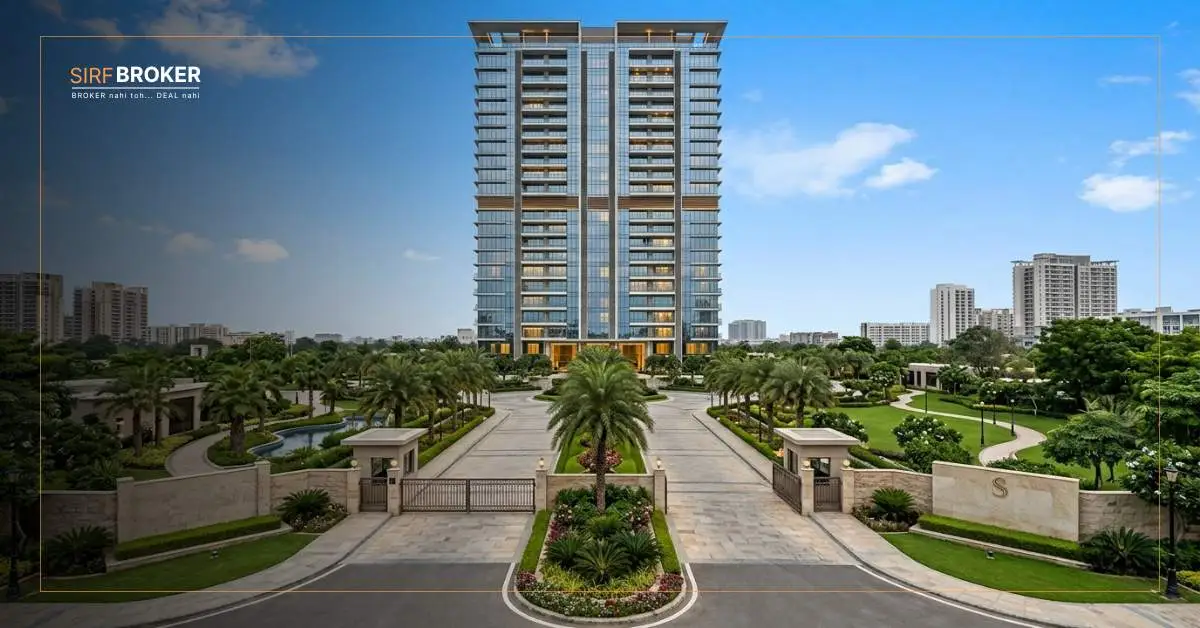
Four years ago, national developers — the Godrejs, Prestiges, Sobhas, Tatas, and Mahindras who dominate residential real estate in Bengaluru, Mumbai, and Pune — had a combined share of just 3% of new residential supply in Delhi NCR. By the end of 2025, that share had crossed 13%. Between 2022 and Q1 2026, these national players launched more than 15,000 residential units across NCR, according to data reported by IQI Global in July 2026 and Business Standard in June 2026.
This is one of the most significant structural shifts in NCR’s residential market in the last decade — and most of its implications for brokers operating in the region are still being underestimated.
The reason these developers have entered NCR is the same reason the market has been welcoming them: buyers in Delhi NCR are willing to pay a significant premium for execution trust. Timely delivery, superior construction quality, transparent governance, and professional after-sales management — the things that national developers have built reputations for in other markets — are now the primary decision triggers for premium residential buyers in Gurugram and Noida. Price has become secondary to the brand on the project hoarding.
| National developer share in NCR: 3% in 2022 → 13%+ in 2026. 15,000+ units launched. Godrej Properties: 47% of national developer supply in NCR. Gurugram: 47% of their geographic preference. NCR premium sales: +30% YoY in Q1 2026. |
Who Is Building What — and Where
The national developer supply in NCR is concentrated — both by developer and by geography — in ways that tell brokers exactly where the demand and the competition are.
| Developer | Share of National Developer Supply in NCR | Primary NCR Focus |
|---|---|---|
| Godrej Properties | 47% | Gurugram — Sector 43, 103, Golf Course Extension Road |
| Prestige Group | 27% | Indirapuram, Noida Expressway, Sector 150 |
| Sobha Ltd | 10% | Gurugram — Golf Course Road, Dwarka Expressway |
| Others (Tata, Mahindra, Adani) | 16% | Mixed — Gurugram, Noida, Greater Noida West |
Source: IQI Global July 2026; Business Standard June 2026; BusinessToday June 2026.
Geographically, Gurugram dominates — accounting for 47% of national developer supply in NCR. Ghaziabad follows at 27%, Noida at 13%, and Greater Noida at 12%. The Gurugram concentration reflects corporate demand from Cyber City and NH-48 employment hubs, infrastructure upgrades along Dwarka Expressway, and buyer preference for established social infrastructure.
Why NCR Buyers Are Choosing Brand Over Price
The shift to branded developers in NCR is not primarily a product story. It is a trust story. NCR’s residential market has an extended history of project delays, stalled constructions, and developer insolvencies that left buyers holding allotment letters for projects that never completed. RERA brought accountability but could not undo the psychological damage of a decade of buyer disappointment.
| THE FOUR THINGS NCR BUYERS NOW PAY A PREMIUM FOR Timely delivery → Godrej Properties has delivered projects on or before RERA-committed dates at a rate that local NCR developers cannot match. For a buyer who has seen family members stuck in delayed projects, delivery certainty is worth 15-20% more on the ticket price. Construction quality → National developers use standardised material specifications and construction management systems. Buyers who have inspected Godrej or Prestige projects in Bengaluru or Pune and then relocate to NCR bring those quality expectations with them. Transparent governance → Listed national developers disclose project completion data, sales figures, and collections quarterly. A buyer can verify the project’s financial health before booking. After-possession management → Premium branded projects typically come with professional society management, organised maintenance, and branded facility management — a category that local developers have historically neglected. |
Delhi-NCR’s premium residential sales rose 30% year-on-year in Q1 2026, per Business Standard data, driven by rising incomes, infrastructure development, and demand from affluent buyers who specifically seek execution trust. The infrastructure component — Dwarka Expressway, Noida International Airport, Delhi-Mumbai Expressway, RRTS, Sohna Corridor, metro expansions — is opening new residential corridors where national developers are establishing first-mover advantage.
What Infrastructure Is Opening Up Next
The geographic expansion of branded residential development in NCR is being driven in large part by infrastructure timelines. Each major infrastructure project creates a window of 18-36 months where land values in the adjacent corridor are still accessible, construction can begin, and possession can be promised at the right time for an emerging demand pool.
| The Noida International Airport (Jewar) corridor is the most significant near-term opportunity in NCR’s residential market. Airport-adjacent residential and hospitality development has a structural demand logic: airport-linked employment zones, reduced travel time for professionals, and the aspirational premium that airport proximity historically commands in Indian real estate. The developers who entered the Jewar belt in 2024-2025 are already sitting on pre-launch inventory that will trade at a material premium at OC. |
The RRTS (Rapid Rail Transit System) corridors — Delhi-Gurugram-SNB, Delhi-Meerut — are similarly creating residential demand inflection points in station-adjacent zones. Brokers who map infrastructure timelines against current land pricing in NCR’s emerging corridors hold an advisory advantage that client portals cannot replicate.
What This Means for Brokers Operating in NCR
The branded residential shift creates two distinct categories of broker opportunity in NCR — and collapses one that used to exist.
First: channel partner relationships with national developers. Godrej, Prestige, Sobha, and others manage their NCR channel partner networks actively. A broker with a verified RERA number, a demonstrated client base in the ₹1 crore+ segment, and the ability to deliver qualified leads — not just walk-ins — can build a recurring new-launch revenue stream through these relationships. This is a different business from opportunistic referrals.
Second: resale advisory on earlier NCR projects — specifically, helping buyers navigate the quality delta between older local developer stock and newer branded projects. A buyer considering a 2022 resale unit in a local developer project versus a 2025 Godrej new launch needs nuanced advisory. The resale is cheaper but comes with RERA history, OC status, maintenance dues, and quality questions that require genuine expertise to assess. For the verification process that protects both buyer and broker, read: Before You Show the Property: The Verification Checklist Every Broker Should Follow.
What collapses: the generalist NCR broker who handles any project at any price point with no specialisation. When national developers bring professional channel partner management and buyer-direct marketing to NCR, the undifferentiated middle is squeezed out.
Sirf Broker POV
The branded residential revolution in NCR is the most important structural shift in the region’s residential market since RERA. It is changing what buyers ask for, what developers have to deliver, and what brokers need to know to remain relevant.
The implication that is being missed: this is not just a premium segment story. It is a trust economy story. When Godrej Properties sells a project in Gurugram at ₹2.5 crore per unit and sells out in a weekend, it is not selling square footage. It is selling certainty. The fact that buyers will pay a 20-30% premium over comparable local developer projects for that certainty is the most important data point in NCR’s housing market right now.
For brokers, the trust economy cuts both ways. A broker who builds a reputation for honest assessment — who tells a client when a project is overpriced, when the RERA timeline is aggressive, when the after-possession maintenance costs are higher than disclosed — builds the same kind of trust premium that Godrej has built in the product market. A broker who sells anything available on commission, regardless of quality, is the local developer equivalent in the advisory market. Both are being disrupted by the same shift in buyer sophistication.
The brokers who will dominate NCR’s residential market over the next five years are the ones who know every branded project’s micro-location strengths and weaknesses, who have read the RERA filings, who understand which sectors of Gurugram have oversupply risk and which are genuinely undersupplied, and who can explain circle rate implications for stamp duty on a ₹2 crore purchase clearly and confidently. That is the bar the market is setting. Brokers who clear it will find this the most active period in NCR’s residential history.
Conclusion
National developers have quadrupled their share of NCR’s residential supply in four years — from 3% to 13% — and the trajectory is not reversing. Godrej, Prestige, Sobha, Tata, Mahindra, and Adani are now permanent features of the NCR residential landscape, not visiting entrants. For brokers, this means building channel relationships with branded developers, developing deep expertise in infrastructure-linked emerging corridors, and positioning as a trust-based advisor in a market where buyer sophistication is rising faster than broker capability in most cases.
For brokers looking to build their profile and client base in NCR’s evolving market, read: From Listings to Personal Brands: The New Broker Reality.
Frequently Asked Questions
1. Which national developers have entered the Delhi NCR residential market?
Godrej Properties leads with 47% of national developer supply in NCR, followed by Prestige Group at 27% and Sobha Ltd at 10%. Tata Housing, Mahindra Lifespaces, and Adani Realty are among the others that have expanded into the region. Together, they launched over 15,000 units in NCR between 2022 and Q1 2026.
2. Why are national developers expanding into Delhi NCR now?
NCR buyers — particularly in the premium segment — are now prioritising execution trust, timely delivery, construction quality, and governance transparency over price. National developers have built strong reputations on these dimensions in Bengaluru, Pune, and Mumbai, and NCR buyers are willing to pay a 15-25% premium for that track record. Infrastructure projects like the Dwarka Expressway, Jewar Airport, and RRTS are also creating new, well-connected corridors where national developers can establish early positions.
3. How much have NCR residential sales grown in 2026?
Delhi-NCR premium residential sales rose 30% year-on-year in Q1 2026, with ₹1 crore-plus homes dominating the market, per Business Standard. The overall NCR market is entering what analysts describe as a structurally stronger growth phase, supported by infrastructure development, rising incomes, and sustained affluent buyer demand.
4. Which micro-markets in NCR are national developers targeting?
Gurugram accounts for 47% of national developer preference in NCR, followed by Ghaziabad at 27%, Noida at 13%, and Greater Noida at 12%. Within Gurugram, Golf Course Road, Golf Course Extension Road, Dwarka Expressway, and Sohna Road are the primary corridors for branded residential launches.
5. What does the branded residential shift mean for brokers in NCR?
It creates two strong opportunities: building channel partner relationships with national developers’ NCR sales teams (which require RERA verification and qualified lead delivery), and positioning as a resale advisor who can honestly compare branded new launches against older local developer stock across RERA status, OC timeline, construction quality, and maintenance cost dimensions. The undifferentiated generalist broker is being squeezed out by developer direct marketing on one side and portal search on the other.
6. How is the Noida International Airport (Jewar) affecting NCR residential demand?
The Jewar corridor is the most significant near-term residential opportunity in NCR outside established Gurugram sectors. Airport-adjacent zones historically command a structural premium driven by employment zone development, reduced travel time, and aspirational positioning. Developers who entered the Jewar belt in 2024-2025 are positioned to capture OC-stage price appreciation as airport construction progresses and the connectivity thesis becomes tangible for buyers.
Sources and References
- IQI Global — India Property Market July 2026 — NCR enters new era of branded development; national developer share 3% (2022) to 13%+ (2026); 15,000+ units launched; Godrej 47%, Prestige 27%, Sobha 10%; Gurugram 47% of geographic preference. iqiglobal.com
- Business Standard — June 2026 — National developers expand footprint in Delhi-NCR housing market; Delhi-NCR premium housing sales jump 30% in Q1. business-standard.com
- BusinessToday — June 2026 — Adani, Tata, Mahindra, Godrej double down on NCR real estate market. businesstoday.in
- JLL India — Residential Dynamics Report Q1 2026 — NCR residential dynamics; price appreciation; infrastructure corridor data. jll.co.in
Disclaimer
| This article is published by Sirf Broker for educational and informational purposes only. Developer market share data, launch figures, and sales growth figures are sourced from publicly available third-party reports cited above and are subject to revision. This is not investment or transaction advice. |