

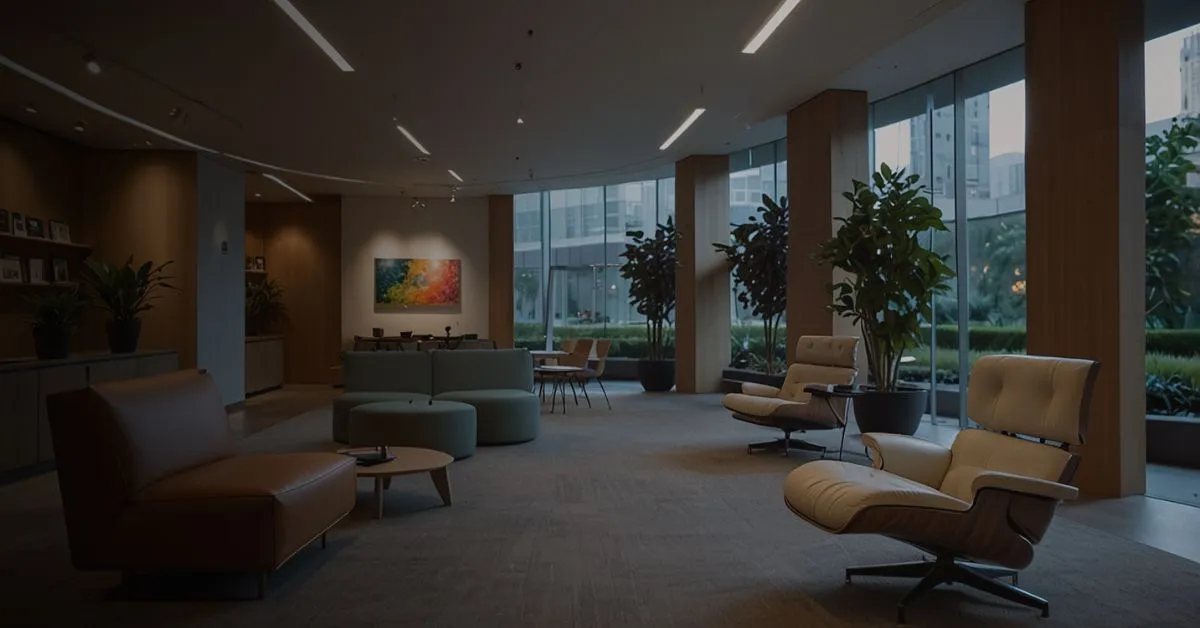
Think back to the pre-2020 office. For most, it was a predictable sea of grey cubicles, a functional pantry for a quick coffee, and a large boardroom that was almost always booked. The primary purpose of the office was simple: to be a place where employees gathered to work. Landlords leased square footage, and companies signed on, viewing it as a necessary operational cost.
That world is gone.
The global shift to remote and hybrid work hasn’t killed the office, but it has fundamentally transformed its purpose. The office is no longer a default destination. It’s a choice. And for employees to choose the commute over the comfort of their home, the office has to offer something significantly better. It has to offer an experience.
This is the new reality of commercial real estate. By 2026, the most successful landlords and brokers will not be those who lease “space,” but those who market “experiences.” The office is no longer just a physical asset; it’s an experience product, designed to boost productivity, foster community, and enhance well-being. Companies that understand this will win the war for talent, and brokers who can guide them will become invaluable partners.
Why the Old Model of “Leasing by the Square Foot” Is Broken
For decades, the commercial real estate conversation was dominated by two factors: location and price. A good location at a competitive price per square foot was a winning formula. Today, that formula is incomplete. The new variable in the equation is the employee, who now has unprecedented power and choice.
1. The Hybrid Work Revolution
The question every company leader is asking is no longer “How do we bring people back to the office?” but “How do we make the office a place people want to come to?” An employee’s home office is customized, comfortable, and has zero commute time. The corporate office must now compete with this. It has to provide a compelling reason for its existence, offering tools, spaces, and an atmosphere that can’t be replicated at home.
2. The Office as a Tool in the War for Talent
In a competitive job market, a company’s office is a powerful recruitment and retention tool. It’s a physical manifestation of the company’s culture and its commitment to its employees. A vibrant, well-designed, amenity-rich office sends a strong message: “We invest in our people.” A dull, uninspired space sends the opposite message. Job candidates are now asking about the work environment just as they ask about salary and benefits.
3. The Focus on Employee Well-being
The conversation around mental and physical health is no longer on the fringes; it’s a core business priority. Burnout is a real cost. Companies are recognizing that the physical environment plays a huge role in employee well-being. An office that promotes health—through natural light, ergonomic furniture, quiet zones for focus, and wellness amenities—is not a luxury; it’s a strategic investment in the company’s most valuable asset.
Simply put, a company doesn’t just need a place for its employees to work. It needs a place for them to thrive.
Defining the “Experience Product”: What Are Companies Really Leasing?
When we say an office is now an “experience product,” we mean that companies are “buying” it to deliver a specific set of benefits to their employees. The focus shifts from the physical dimensions of the space to the human outcomes it enables.
We can break down this “experience” into three core pillars:
P – Productivity & Performance
This goes beyond just having a desk and a chair. It’s about creating a variety of zones that cater to different work styles.
- Focus Zones: Quiet libraries or individual pods for deep, concentrated work.
- Collaboration Hubs: Open, dynamic spaces with whiteboards and flexible furniture for brainstorming.
- Tech-Enabled Meeting Rooms: Seamless video conferencing and smart booking systems.
E – Engagement & Community
The office’s greatest advantage over remote work is its ability to foster human connection.
- “Collision Spaces”: Well-designed cafes, lounges, and walkways that encourage spontaneous interactions and conversations.
- Community Events: Organized events, workshops, and social gatherings that build a sense of belonging.
- A Strong Culture: The office design should reflect and reinforce the company’s values.
W – Well-being & Wellness
This is about supporting the holistic health of the employee.
- Physical Wellness: Access to natural light, good air quality, ergonomic furniture, healthy food options, and fitness facilities.
- Mental Wellness: Dedicated quiet rooms, meditation or prayer rooms, access to outdoor spaces, and biophilic design (incorporating natural elements).
A broker’s job is no longer just to find a space that fits a certain headcount. It’s to find a space that delivers on these three pillars. Forward-thinking brokers, like many of those building their professional portfolios on Sirfbroker, understand this shift and are already curating listings that highlight these experiential qualities.
The Old Lease vs. The New Experience Product
| Aspect | The Old Office Lease | The New Experience Product |
| Key Selling Point | Price per square foot and location. | The quality of the employee experience. |
| Lease Focus | Physical space and basic amenities. | A holistic environment (Productivity, Engagement, Well-being). |
| Amenities | Basic: Pantry, Parking, Security. | Advanced: Wellness rooms, F&B, collaborative tech, event spaces. |
| Broker’s Role | To find and negotiate space. | To consult on workplace strategy and find a solution. |
| Tenant’s ROI | Measured in cost savings. | Measured in talent retention, productivity, and employee satisfaction. |
| The Big Question | “Kitna lagega?” (How much will it cost?) | “Isse milega kya?” (What will we get out of this?) |
How to Find and Lease an “Experience”: A Checklist for Brokers & Tenants
Whether you are a broker advising a client or a business leader looking for a new office, your evaluation process needs to change. Here is a checklist to help you assess an office space as an experience product.
✅ 1. The Arrival & First Impression:
- Is the building entrance and lobby welcoming and impressive?
- How efficient and secure is the entry process?
- Is it easily accessible via public transport?
✅ 2. The Workspace Zones:
- Does it offer a variety of work settings (quiet, collaborative, private)?
- Is the furniture ergonomic and comfortable?
- Is there ample access to power and high-speed internet everywhere?
✅ 3. The Amenity Stack:
- Go beyond the basics. Are there unique amenities that support well-being (e.g., a wellness room, a library, a rooftop terrace)?
- What are the food and beverage options within the building? Are they healthy and varied?
- Are there facilities for learning and development, like an auditorium or training rooms?
✅ 4. The Technology Layer:
- Is the Wi-Fi seamless and robust across the entire space?
- Is there a user-friendly app for booking meeting rooms or accessing building services?
- Are the meeting rooms equipped for frictionless hybrid collaboration?
✅ 5. The Community & Management:
- Does the building management organize community events, workshops, or networking sessions?
- Is the building staff (security, maintenance) professional and responsive?
- Is there a sense of community among the tenants in the building?
A modern broker can use this checklist to create a compelling case for a property, moving the conversation from cost to value. When clients search for commercial properties, they should seek out brokers who can have this level of strategic conversation—many of whom are now using platforms like Sirfbroker to signal their expertise in this new leasing paradigm.
The Future is a Destination Office
The debate is no longer about if the office is relevant, but about what kind of office is relevant. The answer is clear: the office as a destination, not an obligation. A place that employees choose to go to because it helps them do their best work, connect with their colleagues, and feel valued by their employer.
For landlords, this means investing in the experience, not just the structure. For companies, it means viewing their office lease as a strategic investment in talent and culture. And for brokers, it represents a massive opportunity to evolve from being a transactional agent to a strategic workplace consultant.
The language of leasing is changing. It’s less about square feet and more about human-centric design. It’s less about cost and more about value. The brokers and businesses that learn to speak this new language will be the ones who thrive in the new leasing reality of 2026 and beyond.
Looking for an office space that’s more than just four walls? Explore verified brokers on Sirfbroker who understand the new world of workplace experience.